Selected case study
Proprietary work · Protected under NDA
UpAndUp Workforce Platform

- Timeline
- September 2023 – July 2026
- Role
- Founding Senior Product Designer · Design Lead
- Scope
- Product Strategy · Research · Product Design · Systems Design
UpAndUp was a 0→1 venture exploring how technology could improve trust, opportunity and work outcomes across India’s gig and frontline workforce.
What began as a broad mission evolved into a connected ecosystem spanning workforce operations, portable credibility and digital capability — built for workers and the organisations they work with.
TL;DR
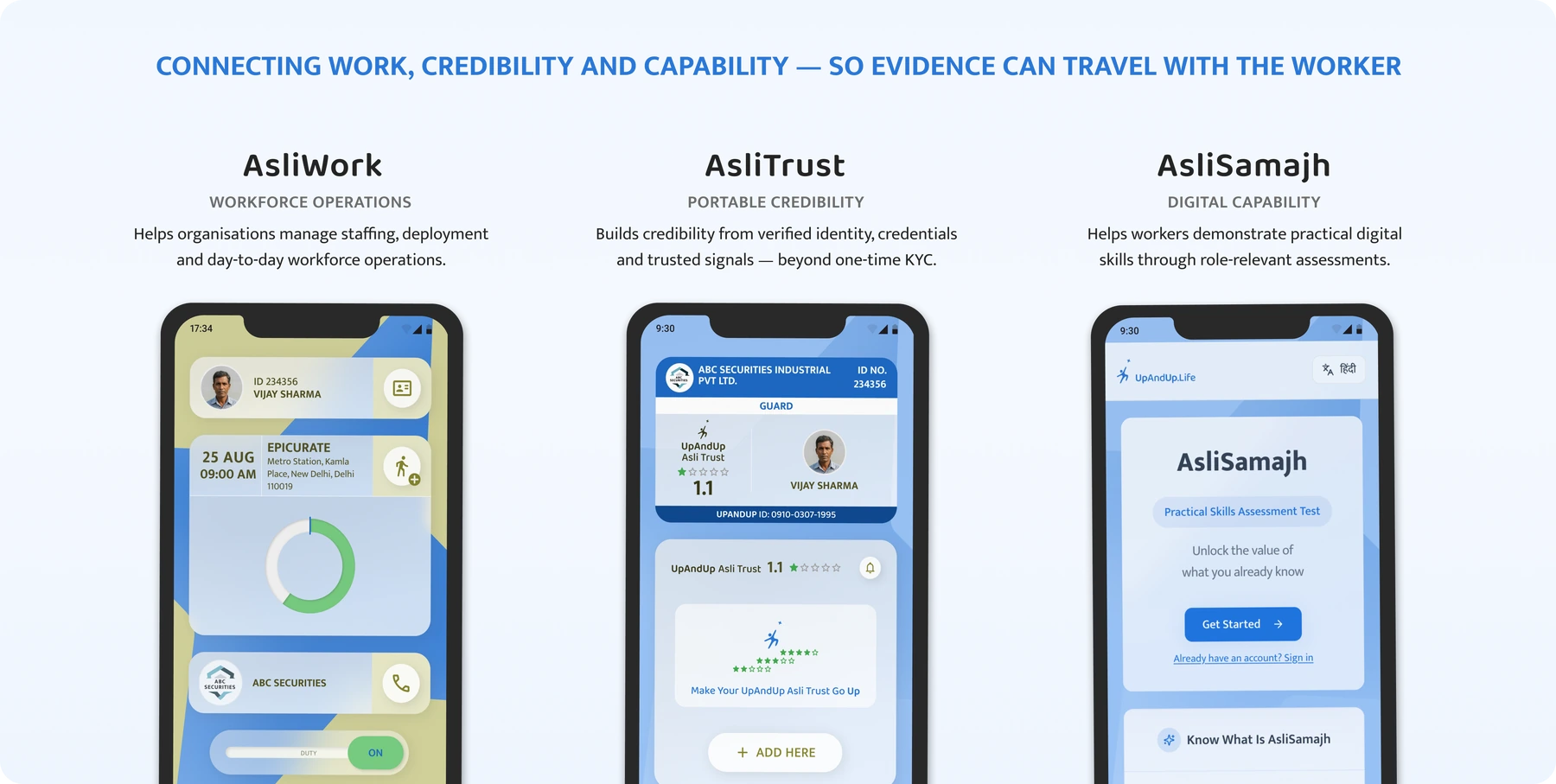
I led research, product strategy and end-to-end design across UpAndUp’s zero-to-one journey, helping turn a broad mission into three connected products: AsliWork, AsliTrust and AsliSamajh.
I helped shape the GTM strategy and led product design across worker and enterprise experiences, while guiding the design/research team and establishing the core workflows, trust and privacy rules, and shared design system. The role moved beyond interface design into defining how the ecosystem should work, scale and protect worker agency.
Where the work landed
By the end of my tenure, AsliWork had progressed to five enterprise pilots, while its D2C model had opened routes into sectors beyond private security. AsliSamajh was live as a digital literacy assessment, and AsliTrust was in active implementation as the credibility layer connecting verified identity and capability.
Together, the products were beginning to reinforce one another: work could create evidence → capability could be demonstrated → selected evidence could become portable.
01. Finding the Right Problem
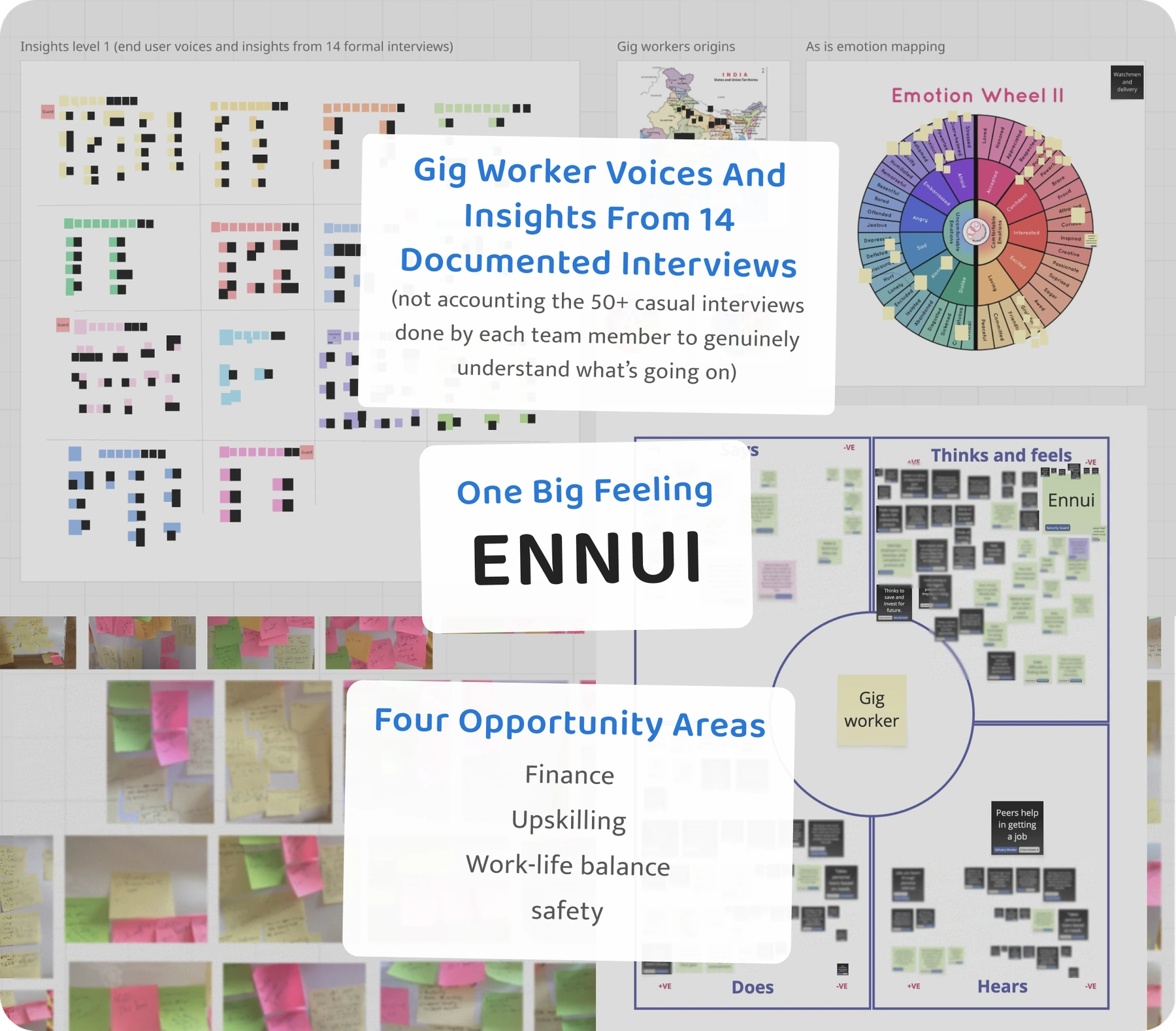
We began with a broad ambition: improve the lives and work outcomes of India’s gig and frontline workforce. We did not yet know where technology could make a meaningful difference.
Across 50+ field interviews, workers surfaced interconnected concerns around financial stability, skills, safety, work-life balance and limited control over their working lives. Early ideas around entrepreneurship or simply creating more job opportunities addressed only part of that reality; for many workers, taking on additional risk was not necessarily progress.
The research shifted our focus towards the conditions that could give workers greater stability, agency and access to opportunity. One recurring gap was credibility: workers accumulated experience and capability through their work, but much of it remained informal, difficult to verify or tied to a particular employer.
That gave us a more actionable question:
How might we help workers build credible, portable evidence of who they are, what they can do and the work they have completed?
02. Finding a Viable Entry Point
From worker-first value to an ecosystem GTM
A standalone worker-facing product required workers to discover, understand and trust an unfamiliar digital service before receiving much value — in a context where digital confidence, device access and trust in new platforms varied significantly.
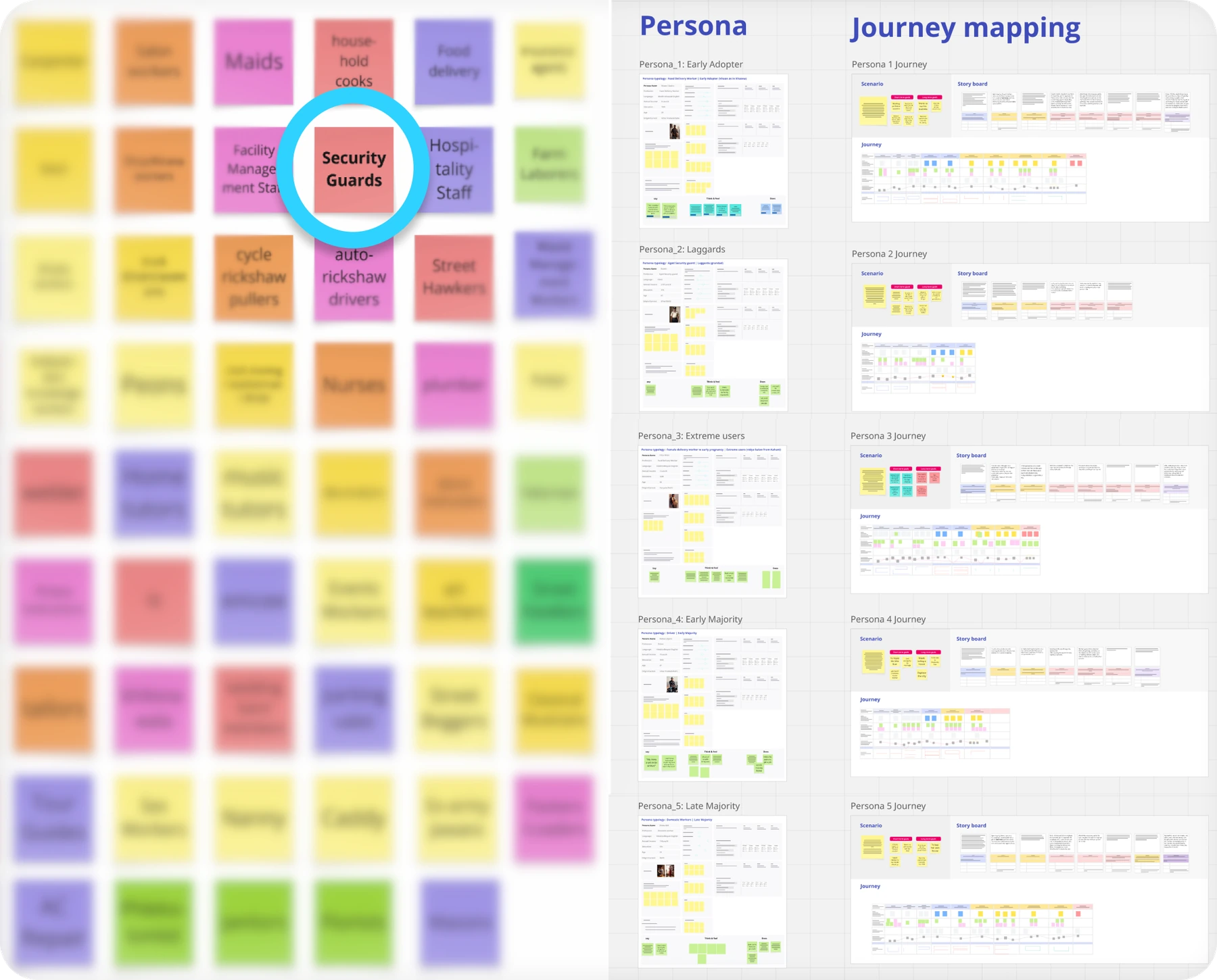
Our research and stakeholder mapping pointed towards Private Security Agencies as a stronger initial GTM. Security combined a large distributed workforce with existing employer-worker relationships and acute operational problems around attendance, deployment, replacements and verification.
This gave us an existing system through which the product could create immediate value and reach workers at scale. Private security became the entry point, not the boundary of the opportunity, later allowing AsliWork to evolve into a lighter model and move into other workforce-heavy sectors.
03. Designing Across the Ecosystem
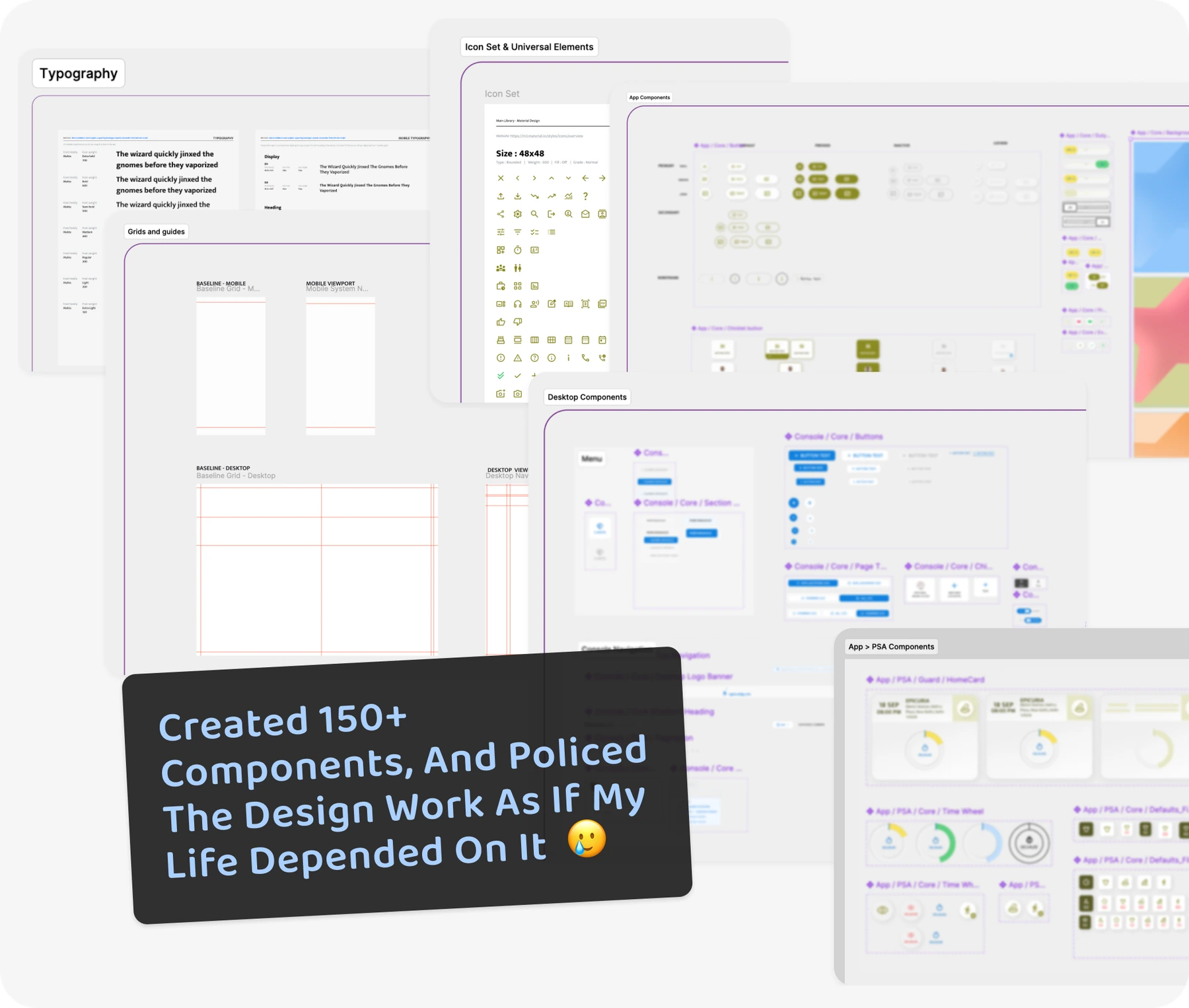
Across the ecosystem, I guided and mentored the design/research team and created and maintained the shared design system across worker and enterprise experiences.
Worker-facing interactions drew from Niyam Bhushan’s Design Principles for Bharat, while privacy by design and DPDP principles shaped how we approached data collection, consent, access and revocation.
I advocated for these as foundational product rules rather than compliance checks added after design — creating a shared approach that could carry across AsliWork, AsliTrust and AsliSamajh as the ecosystem evolved.
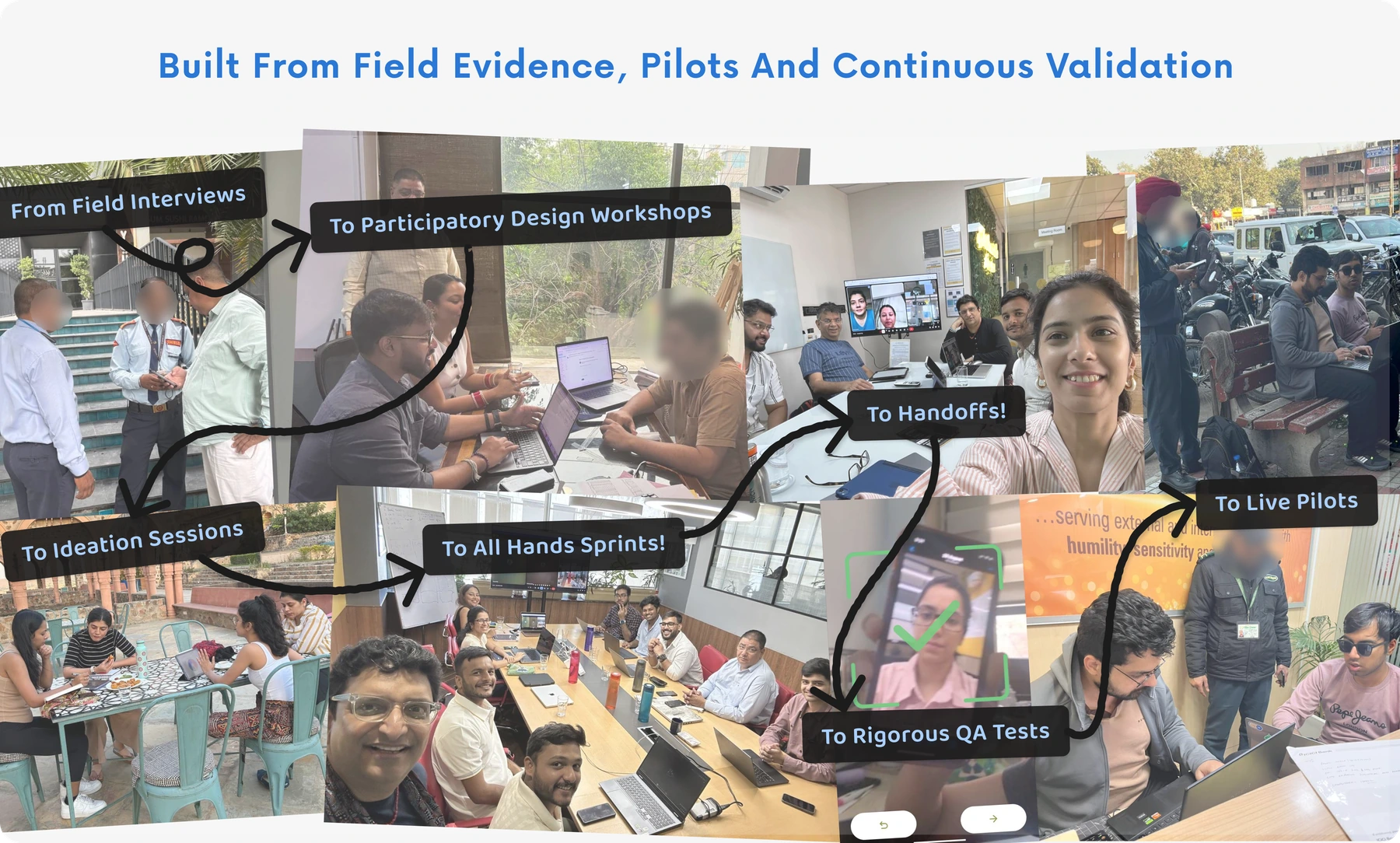
04. the Product Ecosystem
A. AsliWork
Turning fragmented workforce operations into connected digital workflows
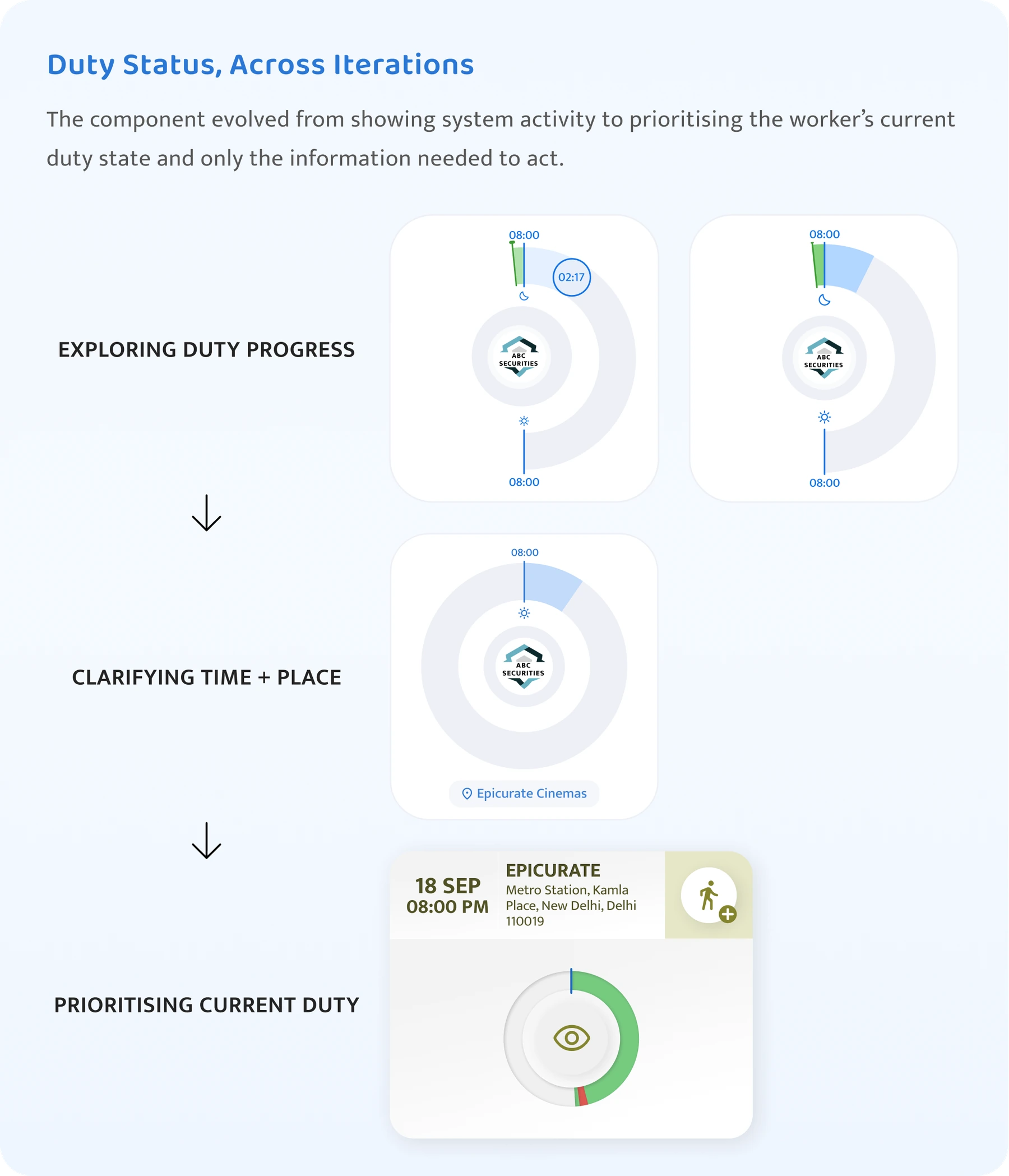
I led product design across AsliWork’s worker and enterprise experiences, translating operations that often ran through paper rosters, calls, WhatsApp and individual memory into connected workflows.
Turning operational visibility into action
Field officers needed a live picture of deployment — who had arrived, who was missing, what had changed and where intervention was needed.
Rather than simply digitising the roster, I designed the enterprise experience around an exception-first model, surfacing absences, late arrivals, replacements and site issues that required action.
For workers, the same infrastructure created a digital record of completed work.
A. AsliWork
From Enterprise AsliWork to a parallel D2C Model
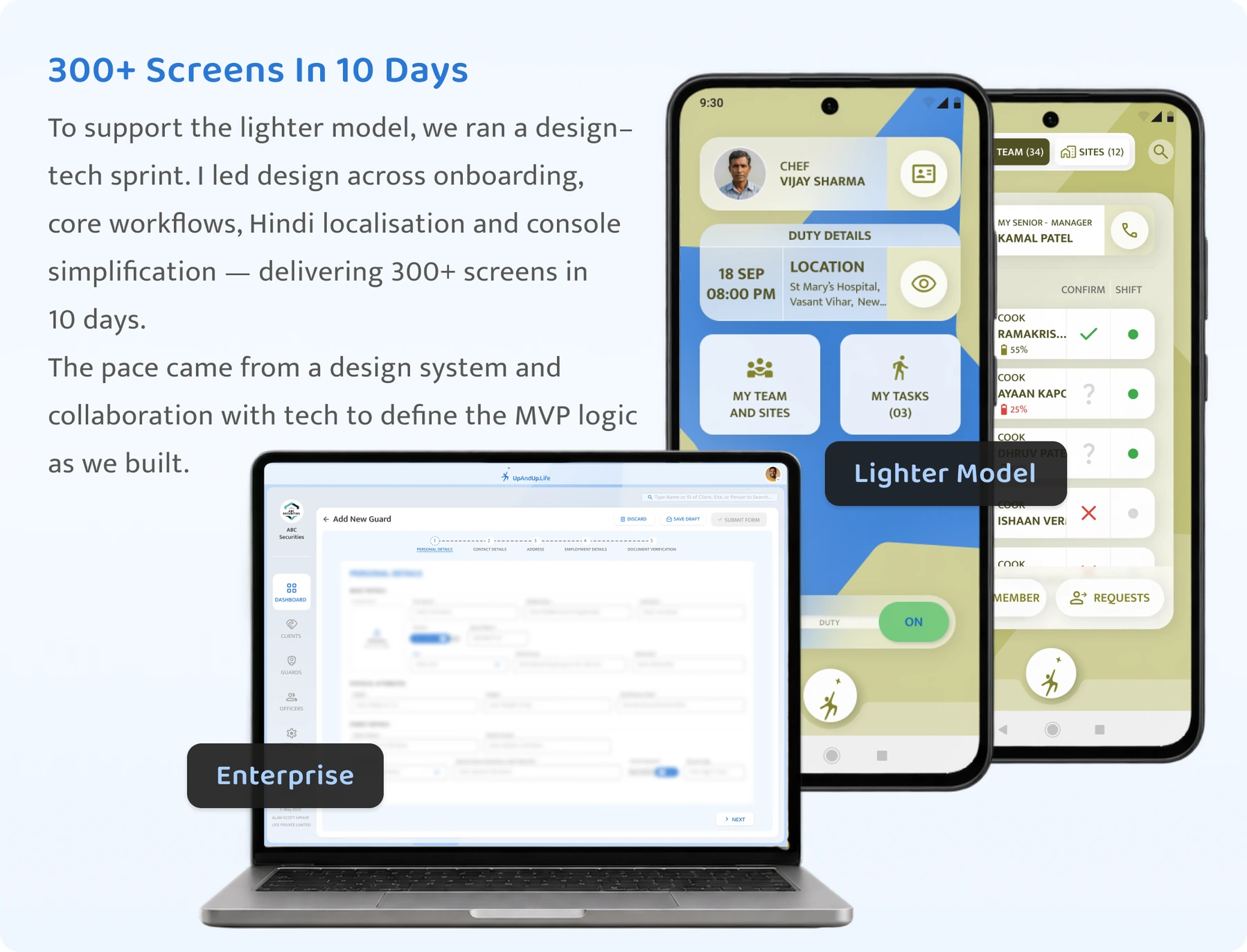
Pilots showed that our first enterprise model required too much setup before organisations saw value.
The issue was bigger than onboarding UX: the product depended too heavily on organisational maturity.
I helped redefine AsliWork as a lighter model with simpler setup and fewer infrastructure-dependent features, reducing adoption effort and helping it expand beyond private security.
B. AsliTrust
Moving beyond static identity verification
KYC could establish whether an identity or credential was valid, but that was only one part of trust.
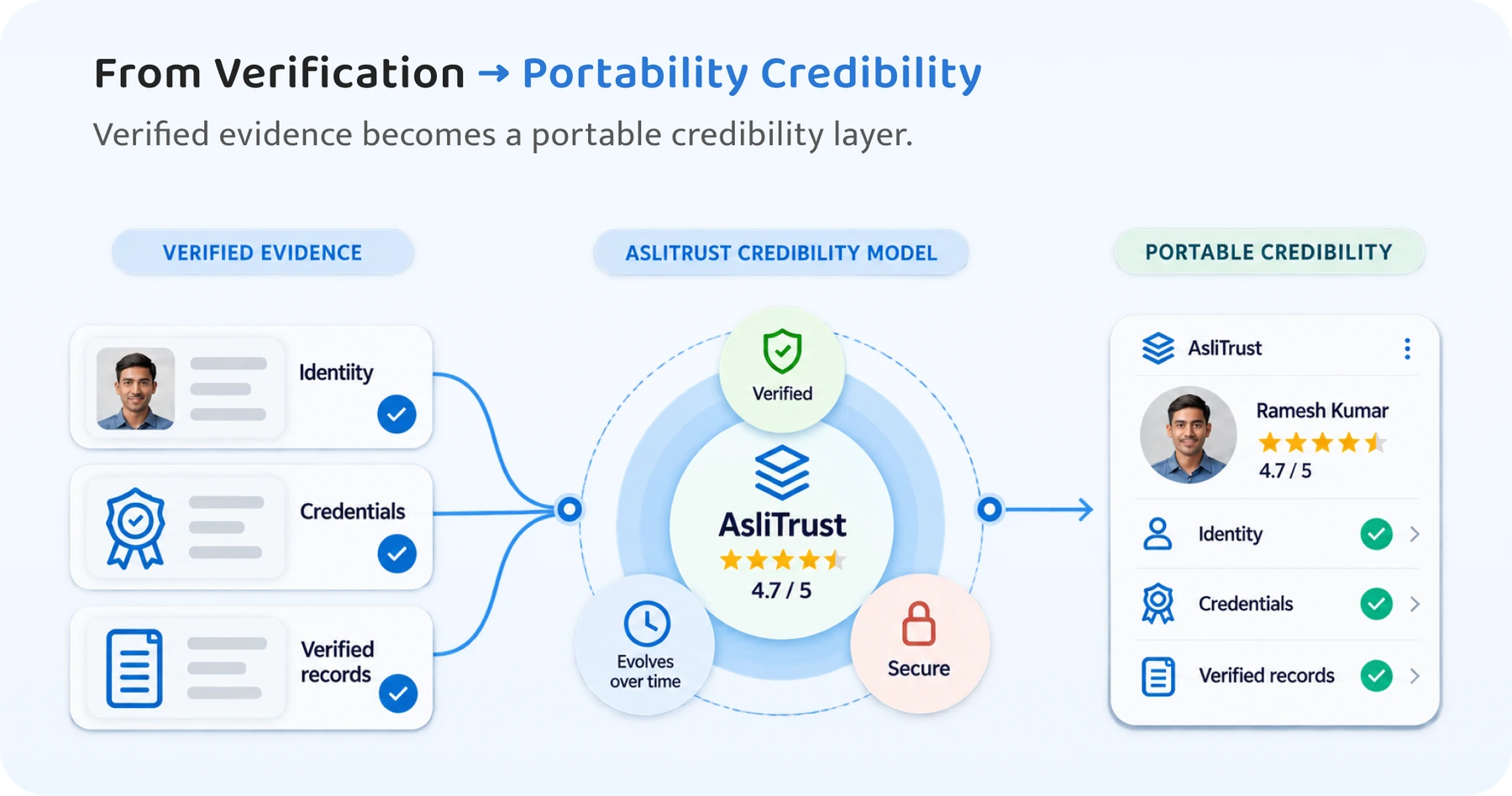
Research into Indian digital identity, government credentials, verification systems and SSI models led us towards a more dynamic idea: credibility built from multiple forms of verified evidence, not a one-time check.
Designing a dynamic credibility model
I worked directly with the CDO on the AsliTrust algorithm, defining how different trust signals contributed to credibility, how they changed over time, and where the model needed clear limits.
The result was a portable credibility layer designed to evolve as verified evidence accumulated.
Deciding what should not become portable
One boundary became especially important: employment performance should not become part of a worker’s permanent identity credibility.
Employer feedback is contextual and subjective. Carrying it indefinitely could allow one workplace relationship or judgement to follow someone into future opportunities without context.
We therefore separated portable credibility from contextual employment performance, rather than treating more signals as automatically better.
B. AsliTrust
C. AsliSamajh
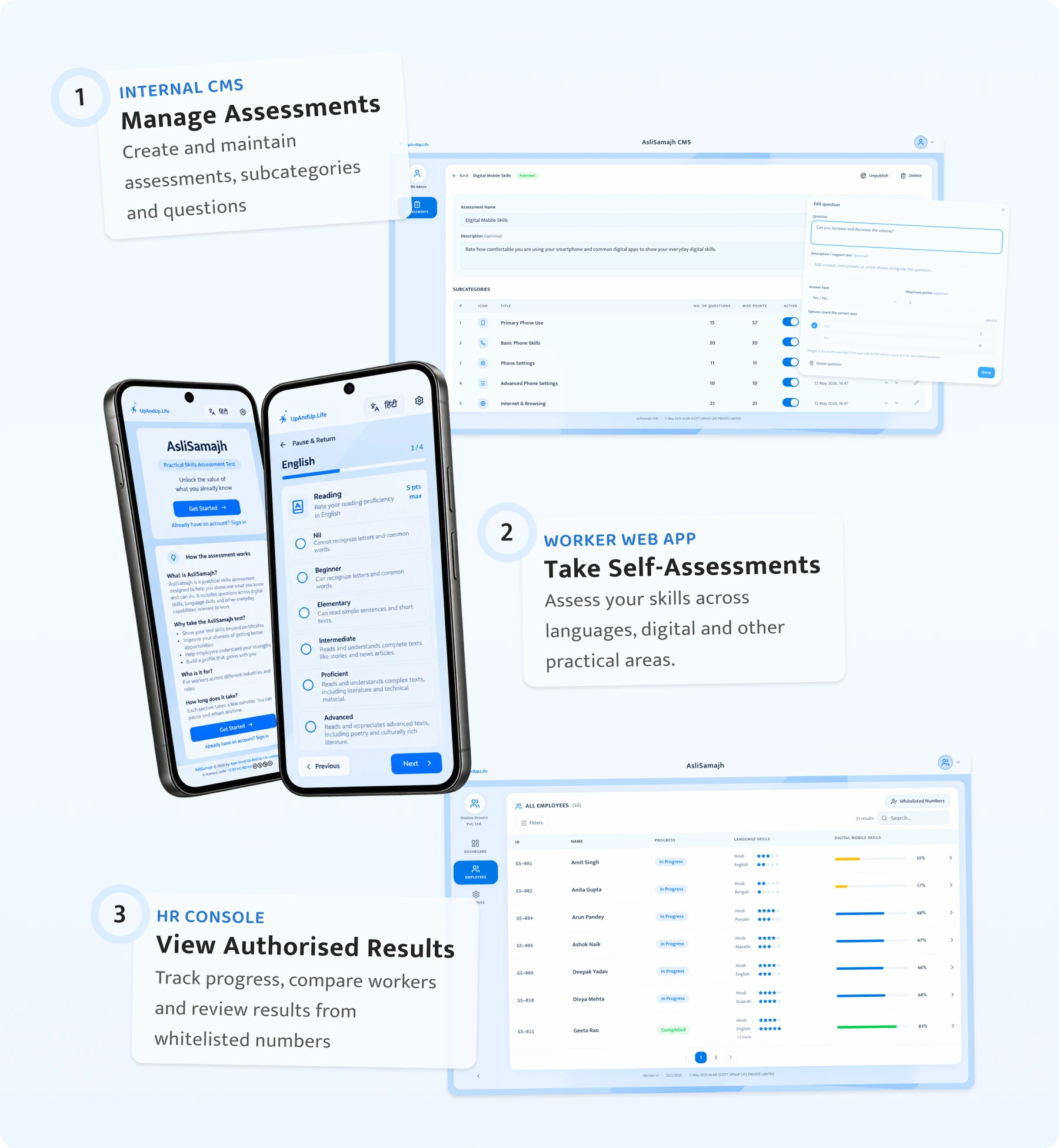
AsliSamajh was designed as a practical skills assessment platform, helping workers make capabilities visible beyond formal qualifications.
Digital literacy was the first framework, developed by our UXR and CDO around practical, context- and role-relevant tasks. The platform could extend into areas such as financial literacy and industry-specific skills.
Workers could also self-rate reading, writing, speaking and listening across Indian languages — particularly useful for migrant workers being deployed to roles where language capability mattered.
Turning a framework into a product
I productised AsliSamajh across three connected interfaces:
- Worker web app — take assessments and build a skills profile
- HR console — view and compare authorised worker results
- Internal CMS — create and maintain assessments, categories and questions
The Decisions Beyond the Screens
UpAndUp changed how I think about designing products inside systems where participants do not hold equal power. A product can be easy to use and still fail if people do not trust why information is being collected, who benefits from it or what consequences it may create.
Across AsliWork, AsliTrust and AsliSamajh, some of the most consequential decisions were therefore not screens. They were rules around visibility, ownership, privacy, consent, incentives and the boundaries the system should not cross.
The interface is one expression of a product. The deeper design work is deciding how the system should behave.