Selected case study
Client work · Atoms
Iper × Vinhood — From Kiosk to Shelf
- Timeline
- 8 Weeks · 2022
- Role
- Experience Designer
- Scope
- Field research · UX analysis · Journey mapping · Recommendations · Future-state flows
Vinhood was one of several digital touchpoints tested inside Iper La grande i in Rozzano. The service helped customers discover wines based on taste and food pairing — but the experience depended on more than the touchscreen.
Customers first had to notice the service, understand what it did, identify compatible wines, and then find the recommended bottle on the physical shelf. That made Vinhood a phygital journey, where the digital interface and the physical store had to work together.
Role & Scope
My work included:
- planning and supporting field research,
- synthesising 20+ videos and 100+ photographs,
- analysing how digital touchpoints behaved in-store,
- mapping the customer journey,
- identifying friction and opportunity areas,
- and translating findings into recommendations and future-state flows.
The wider Iper study covered several in-store digital touchpoints. I worked with a UXR and Senior UX Designer; this case study focuses on the Vinhood journey.
01. Seeing the Experience in Context
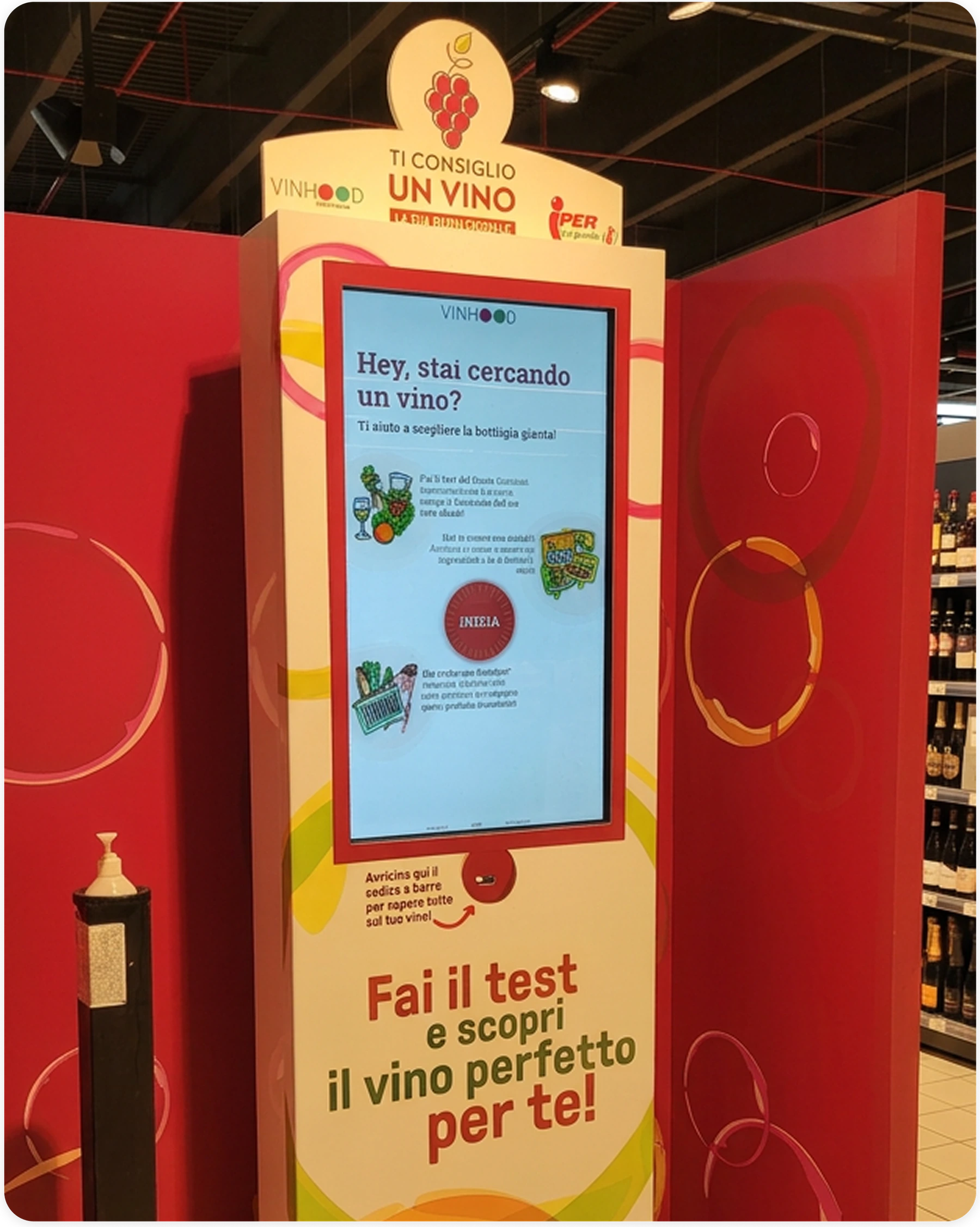
We observed Vinhood inside the real supermarket environment.
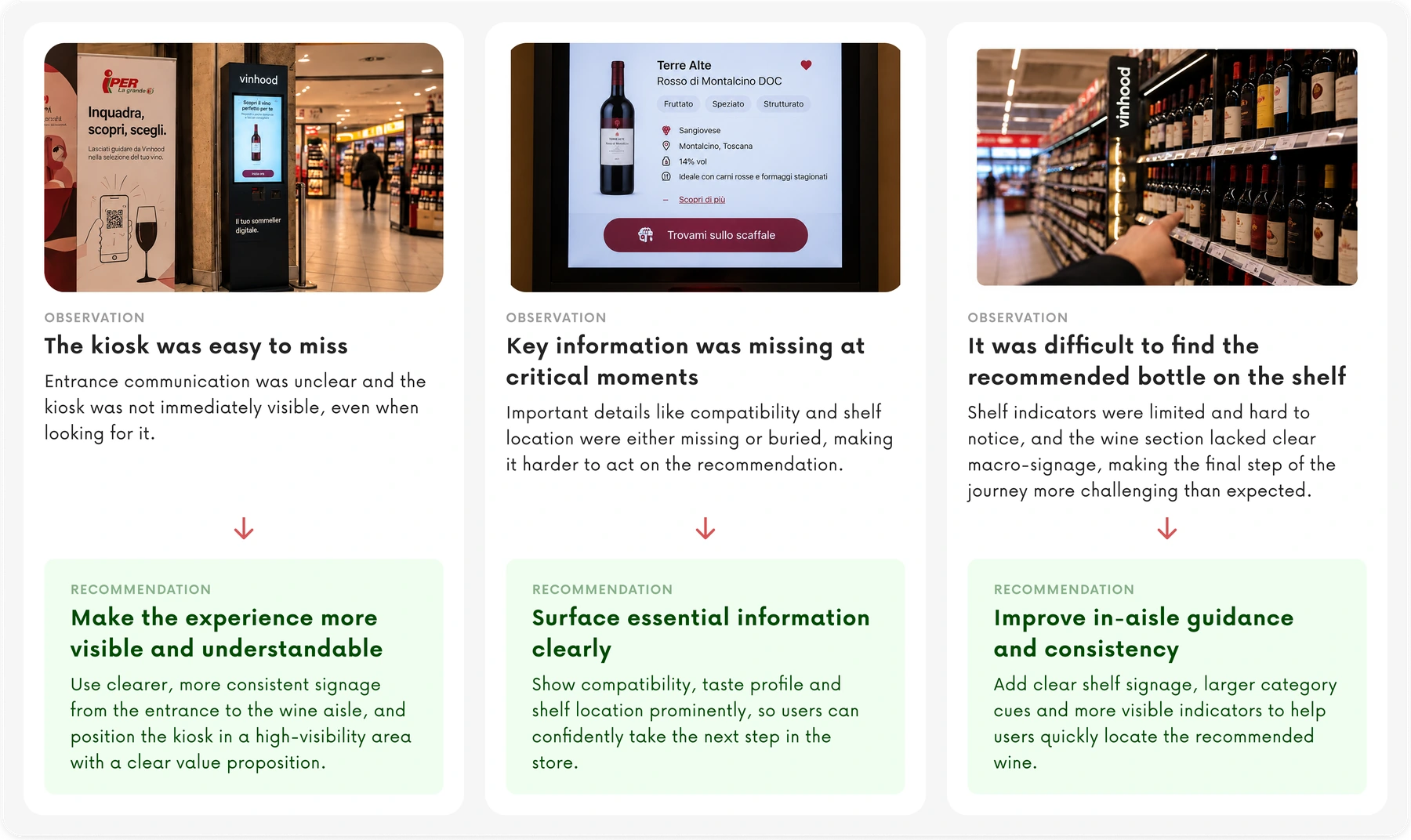
The totem was easy to miss from some of the main store routes. Promotional displays partly blocked it, and there was limited signage directing customers towards the service.
This meant the first problem appeared before anyone touched the interface.
The experience needed to answer three questions quickly:
- What is this?
- Why should I use it?
- Where do I start?
Discoverability, placement and communication therefore became part of the product experience.
02. Understanding the Kiosk Journey
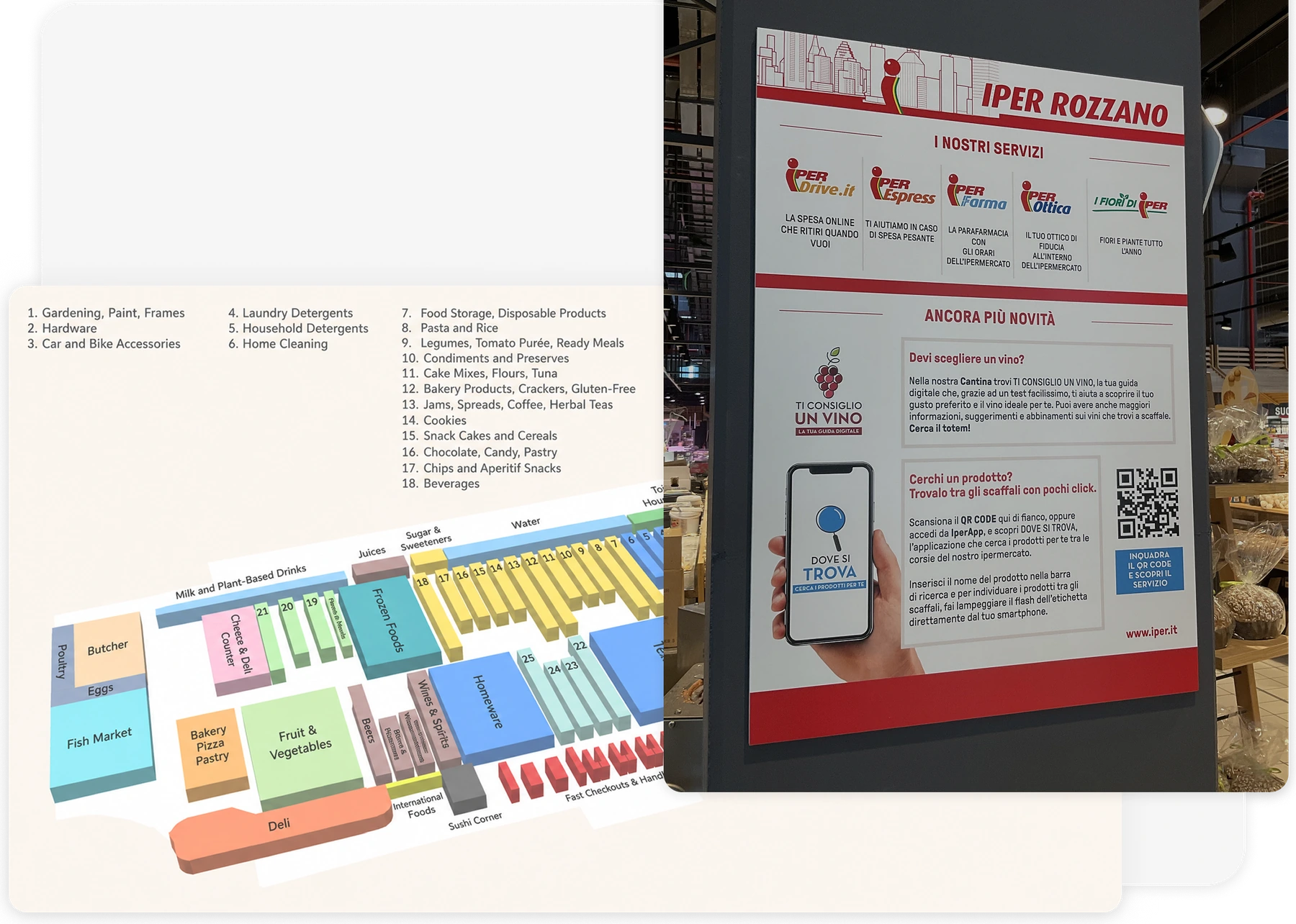
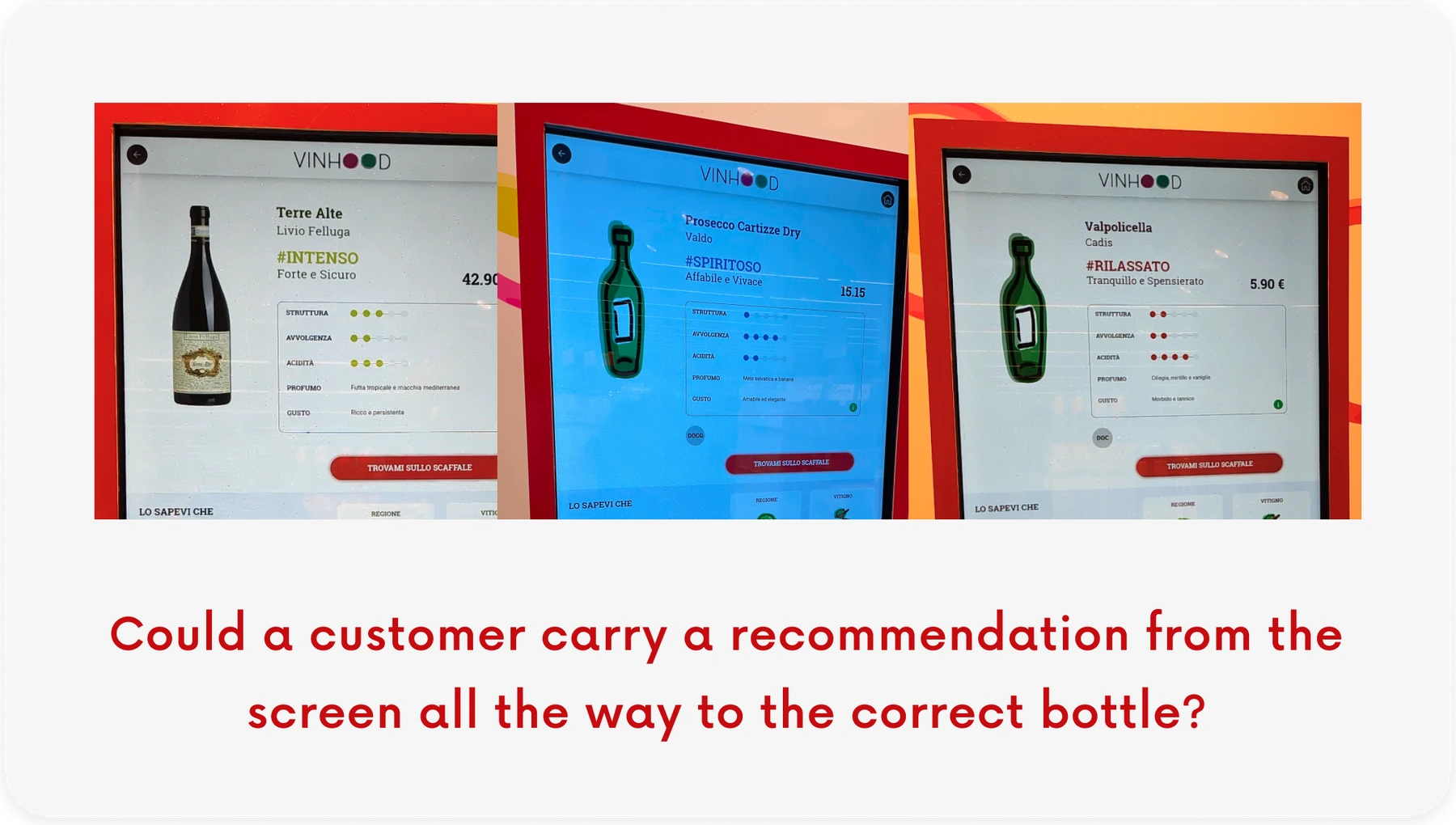
Once at the totem, customers could explore wines through Vinhood’s recommendation experience.
The touchscreen explained the service more clearly than the surrounding printed material, but some interactions still depended on information that was easy to miss.
For example, the barcode scanner suggested that customers could scan bottles, but only specific Vinhood-compatible wines worked with it.
Inside a busy supermarket, customers had little patience for trial and error. The experience needed to explain limitations before confusion happened, not after.
03. From Recommendation to Shelf
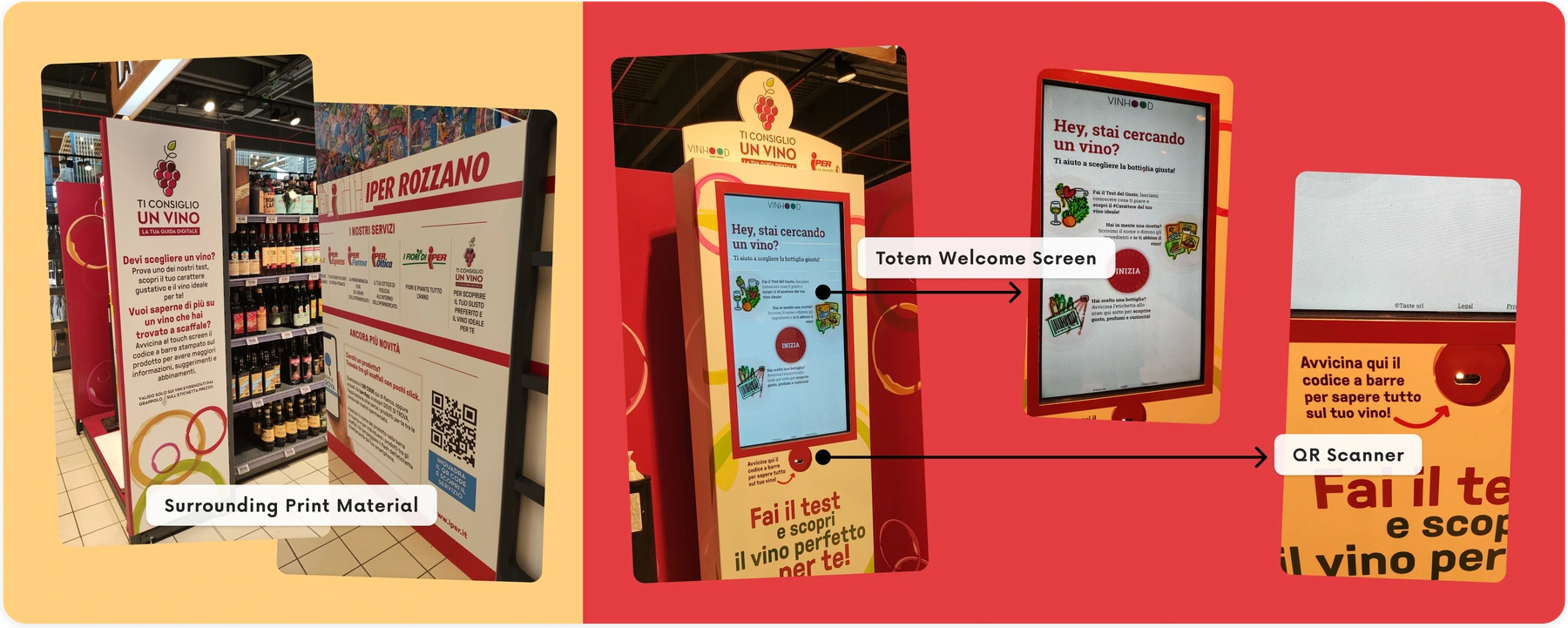
The journey did not end when Vinhood recommended a wine. The customer still had to find the correct bottle.
This exposed the main phygital challenge: the digital system and the physical wine section needed to speak the same language.
We found gaps between:
-
terminology used by Vinhood,
-
how compatible bottles were identified,
-
wine information available to customers,
-
and signage within the aisle.
04. Designing the End-to-End Journey
The recommendations focused on improving the journey beyond the touchscreen.
Key opportunities included:
- making the totem easier to notice,
- explaining Vinhood’s value before asking customers to interact,
- making compatible bottles easier to identify,
- improving navigation through the wine section,
- and explaining unfamiliar wine terminology closer to the point of use.
The aim was to reduce the gaps between discovering the service, using it and acting on its recommendation in the physical store.
05. What the Project Showed
Vinhood made the limits of screen-only thinking very visible.
A digital interface can work well in isolation and still fail once it enters a physical environment. Placement, signage, terminology, product identification and shelf organisation all influenced whether the recommendation was actually useful.
The meaningful unit of design was therefore not the totem itself. It was the journey from noticing Vinhood to finding the recommended wine.