Selected case study
Masters Thesis · Politecnico Di Milano
How to Include Gender
- Timeline
- 6 months · Nov 2020 – Apr 2021
- Role
- Researcher & Designer
- Scope
- Design research · Inclusive design · Framework design · Workshop toolkit · Validation
How to Include Gender is a guide for designers and business stakeholders to identify gender exclusion in e-commerce experiences and work towards more inclusive alternatives.
I worked independently as both the researcher and designer throughout the six-month Master’s thesis.
What was I trying to solve?
I framed the thesis around two questions:
-
How might the people involved in creating an e-commerce experience — from business stakeholders to designers — better recognise and empathise with people excluded by gendered assumptions?
-
How might we identify where gender exclusion appears across an e-commerce journey and then create a systematic way to address it?
Choosing the Right Research Mix
-
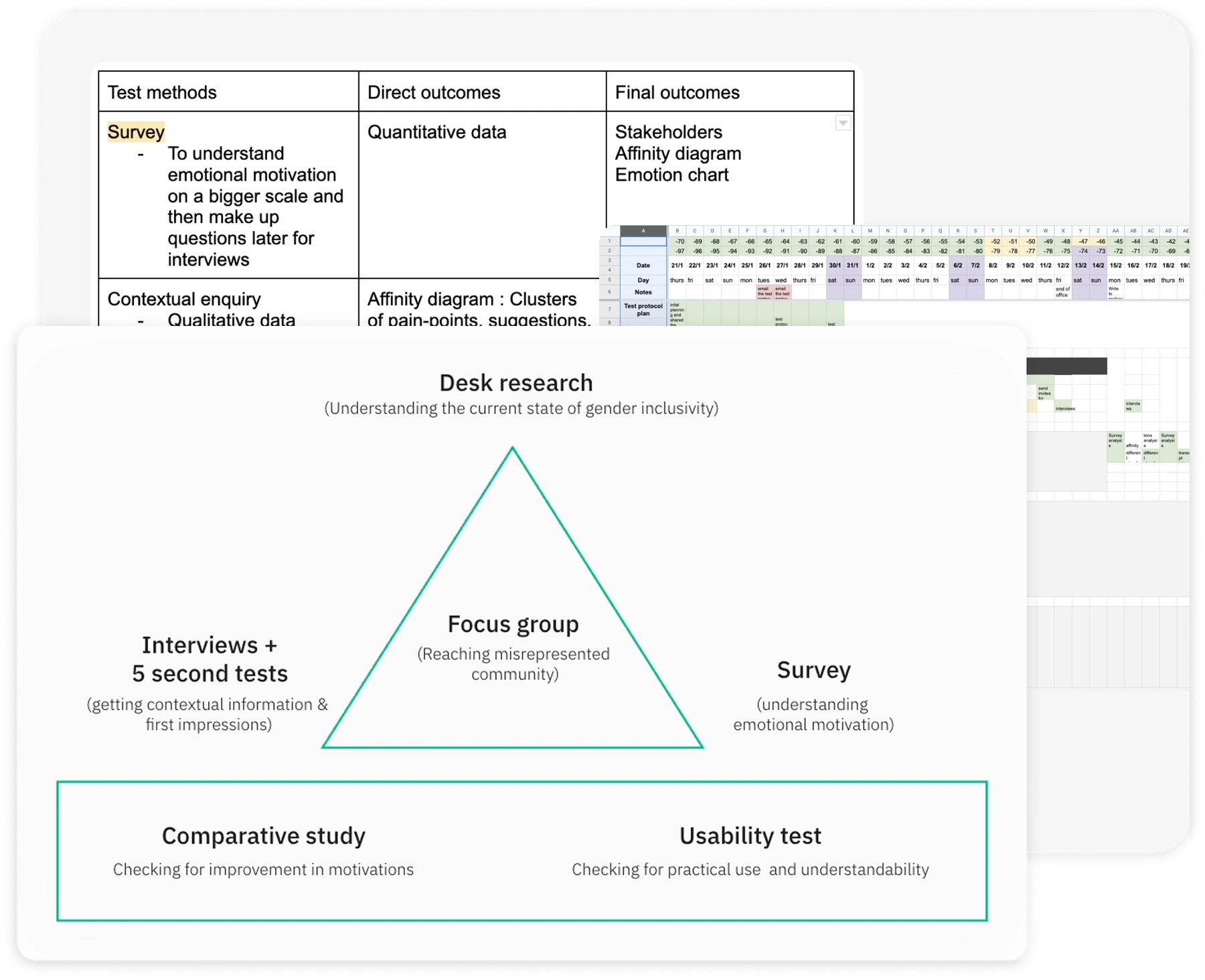
I started by defining the questions the research needed to answer, then selected and organised different methods across six to seven weeks, followed by analysis and validation.
-
Using a mix of methods helped me triangulate mostly qualitative evidence and look for overlaps and correlations across different data points.
-
The most difficult part was the primary research — finding real-life evidence of gender exclusion in digital experiences, and recruiting people who could speak to those experiences.
Seeing the Bigger Picture
-
Bringing findings from different research methods together helped surface recurring patterns of exclusion and gave me a more complete view of the problem.
-
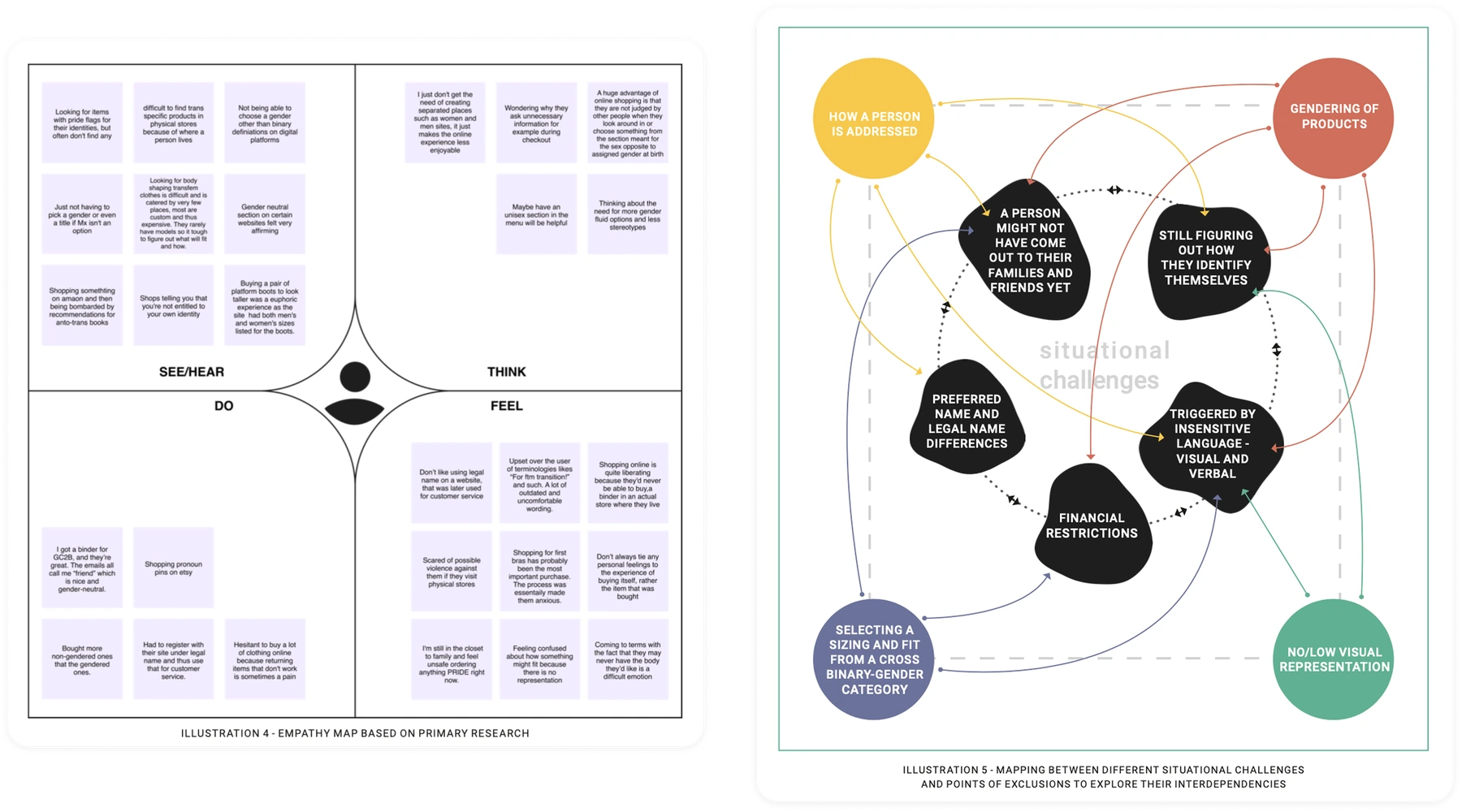
That broader view made it clear that isolated interface recommendations would not be enough. The work needed a framework that could help teams recognise exclusion, discuss it together and decide where intervention was needed.
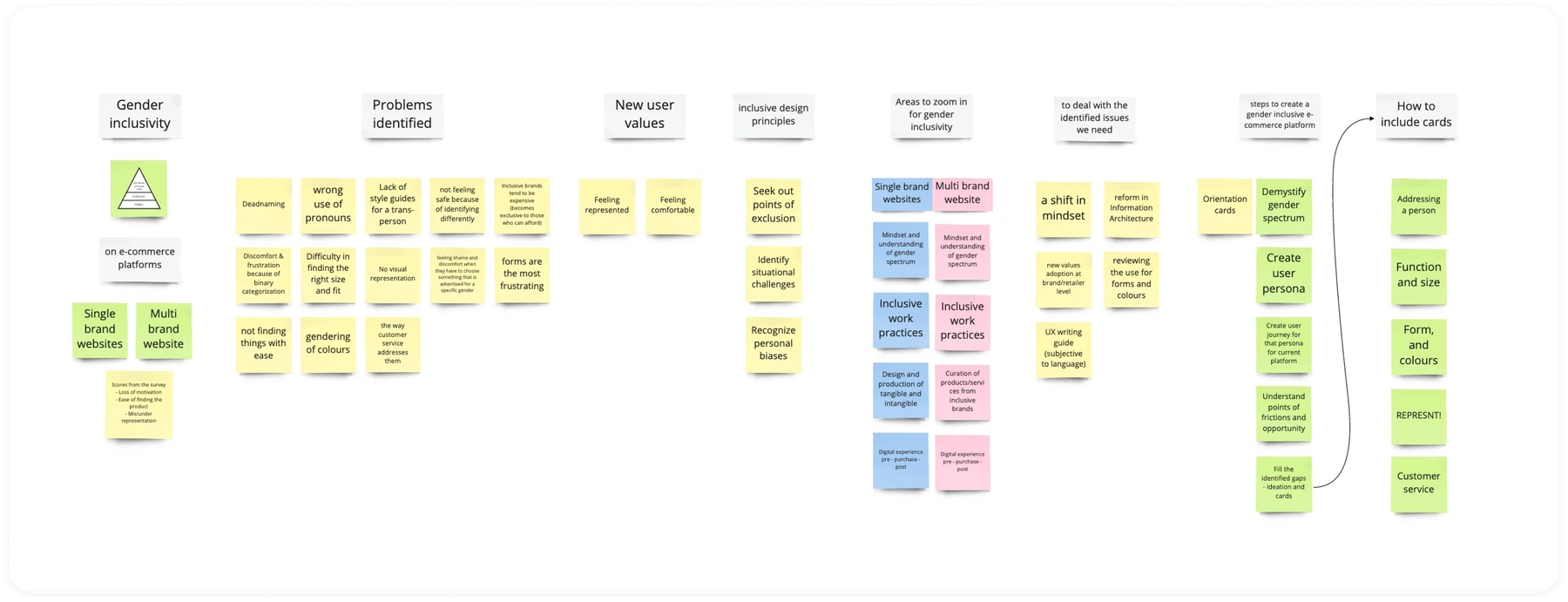
- I then mapped how different situational challenges connected to points of exclusion, using empathy mapping and situational personas to understand how those moments could affect people in different contexts.
Finding the Intervention Points
-
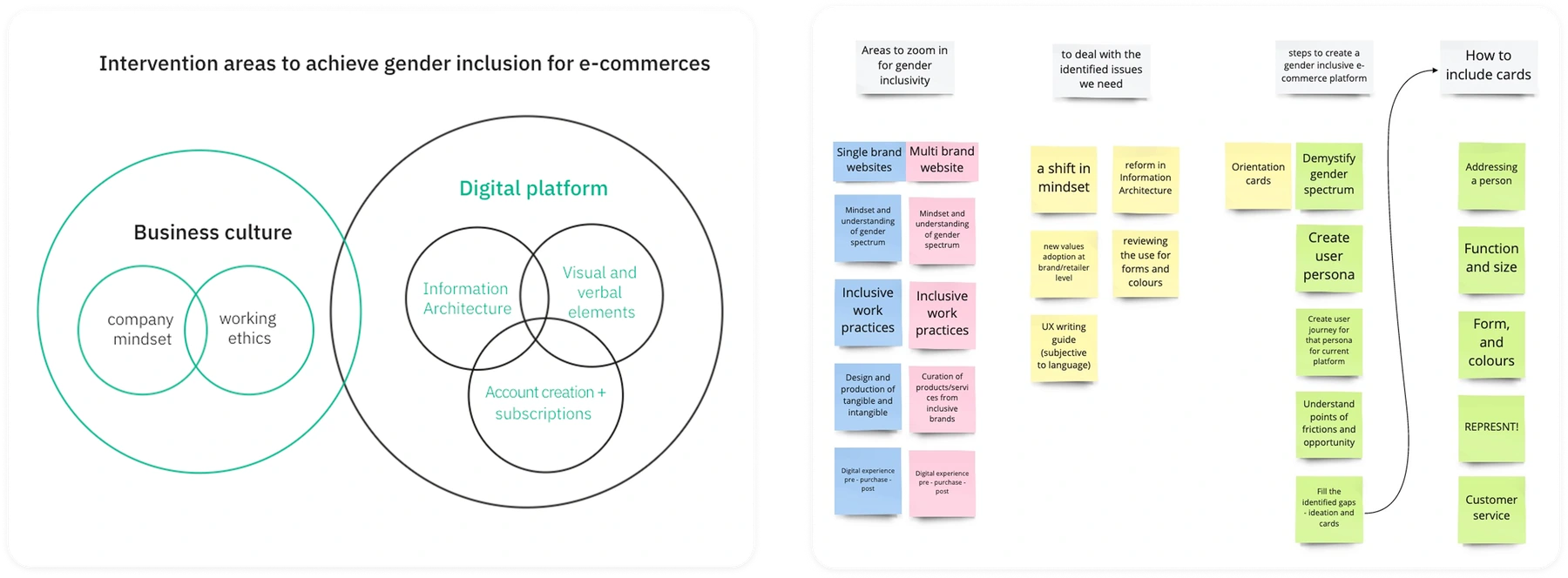
The research showed that exclusion was not limited to the interface. The opportunities for change appeared across two broader areas: business culture and the digital platform.
-
Mapping these areas helped me identify where intervention was possible — from company mindset and working practices to information architecture, account creation, subscriptions, and visual or verbal elements.
-
This became the bridge between the research and the eventual framework: first locate where exclusion could occur, then define what teams could do about it.
Choosing the Right Format
-
I chose a card-based workshop because I wanted the process to stay inquisitive, collaborative and equity-driven, rather than become a fixed checklist.
-
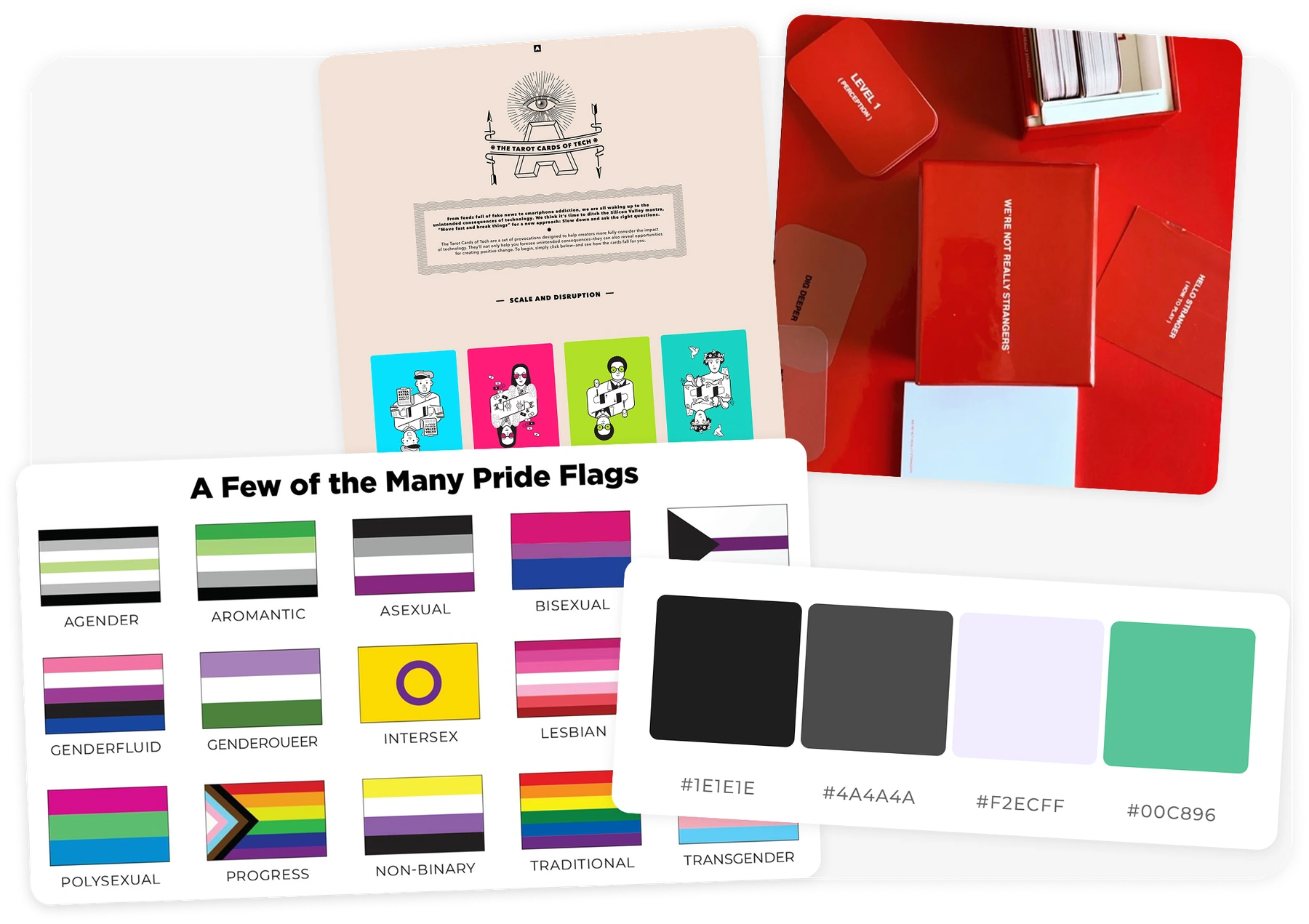
The format was also inspired by the 8provocative nature of card games8 — prompts could open up discussion rather than prescribe an answer. I also saw the possibility of adapting the format beyond gender.
-
I explored Pride flags and more neutral colour systems to avoid reinforcing unnecessary gendered assumptions in the visual identity.
-
The project also reinforced how difficult it is to remove bias entirely, making equity an important principle behind the framework.
How the Guide Works
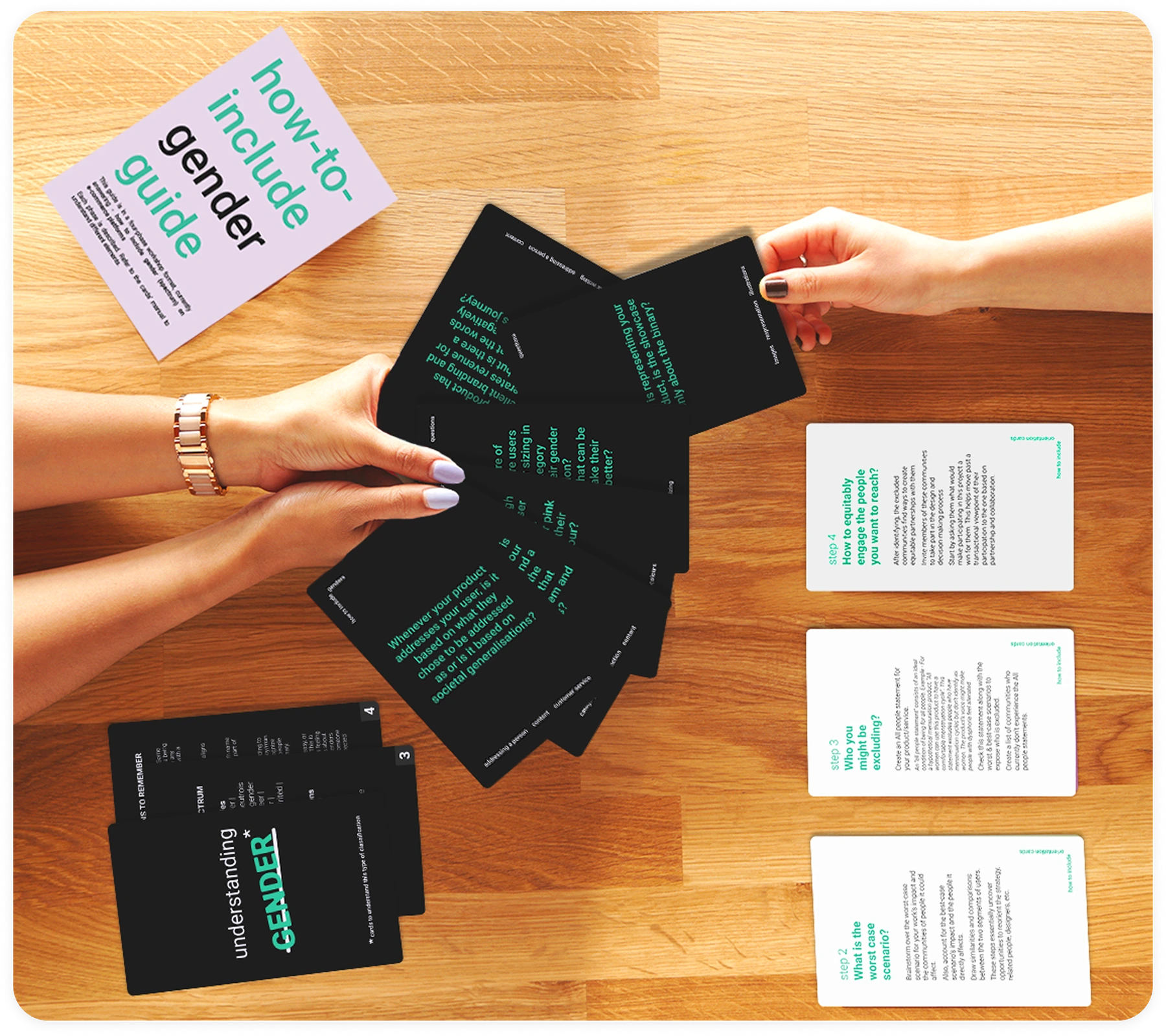
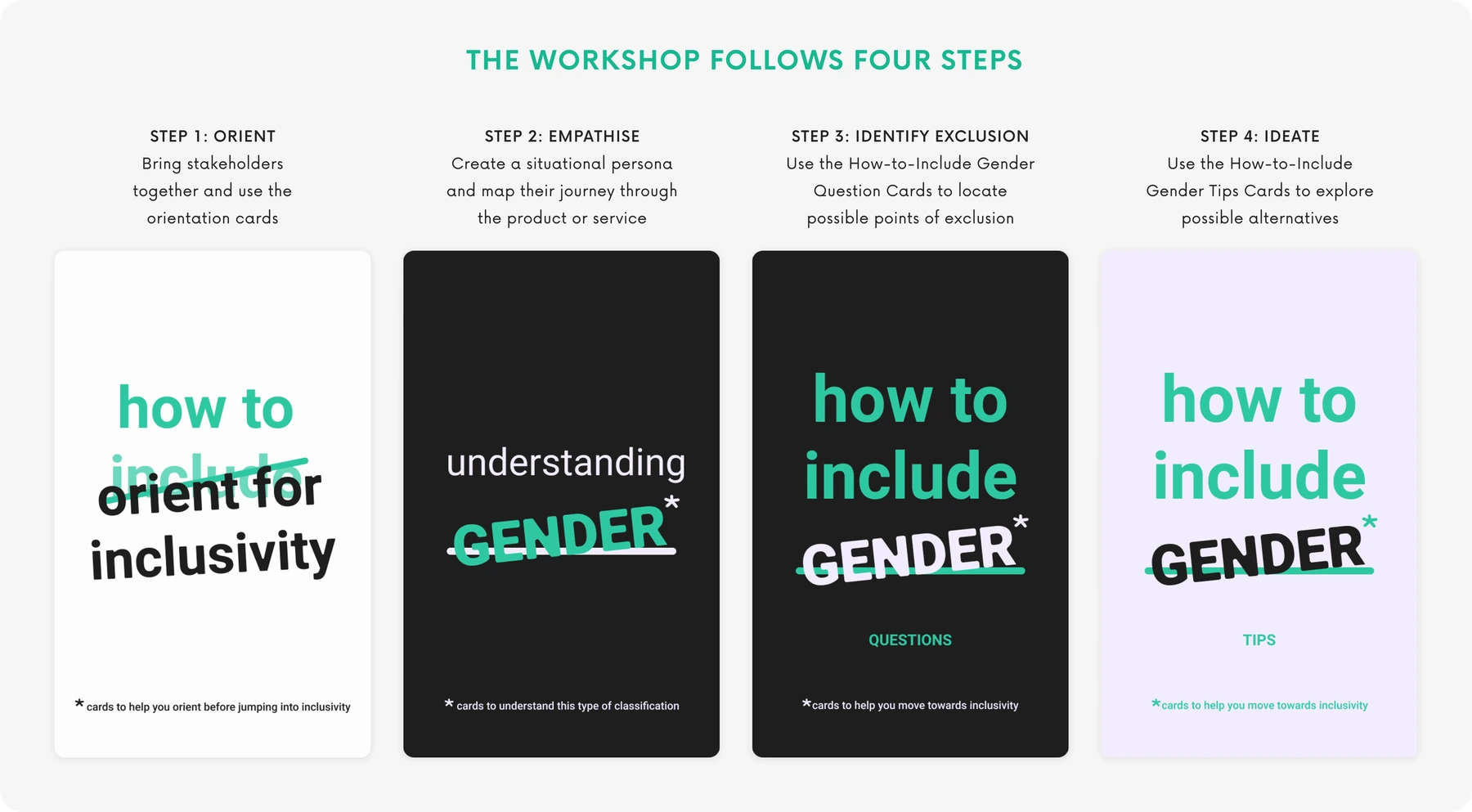
The How-to-Include Guide gives designers and business stakeholders a structured path from recognising exclusion to exploring possible inclusive changes in an e-commerce product or service.
What Happens When the Cards Are Used?
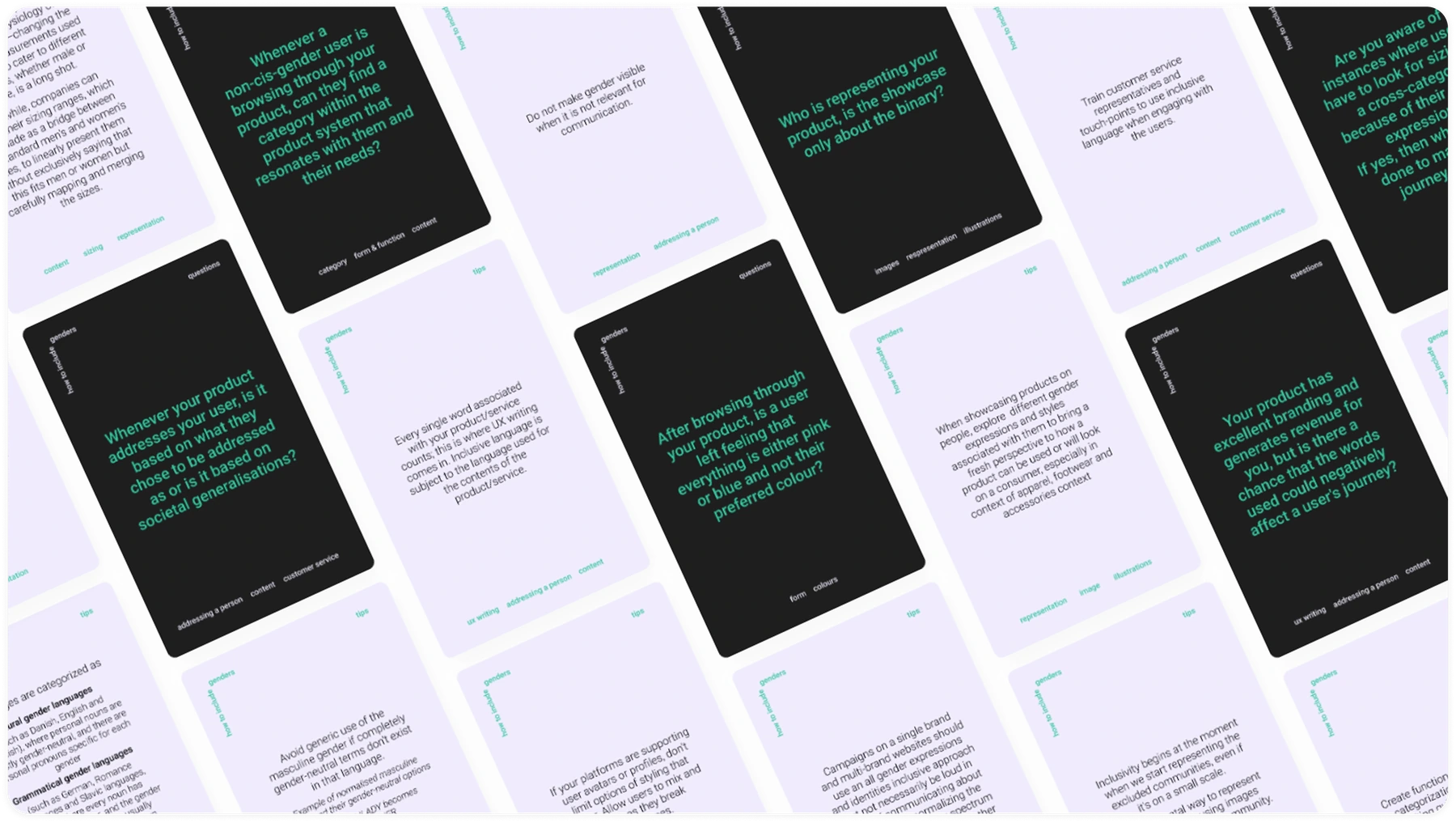
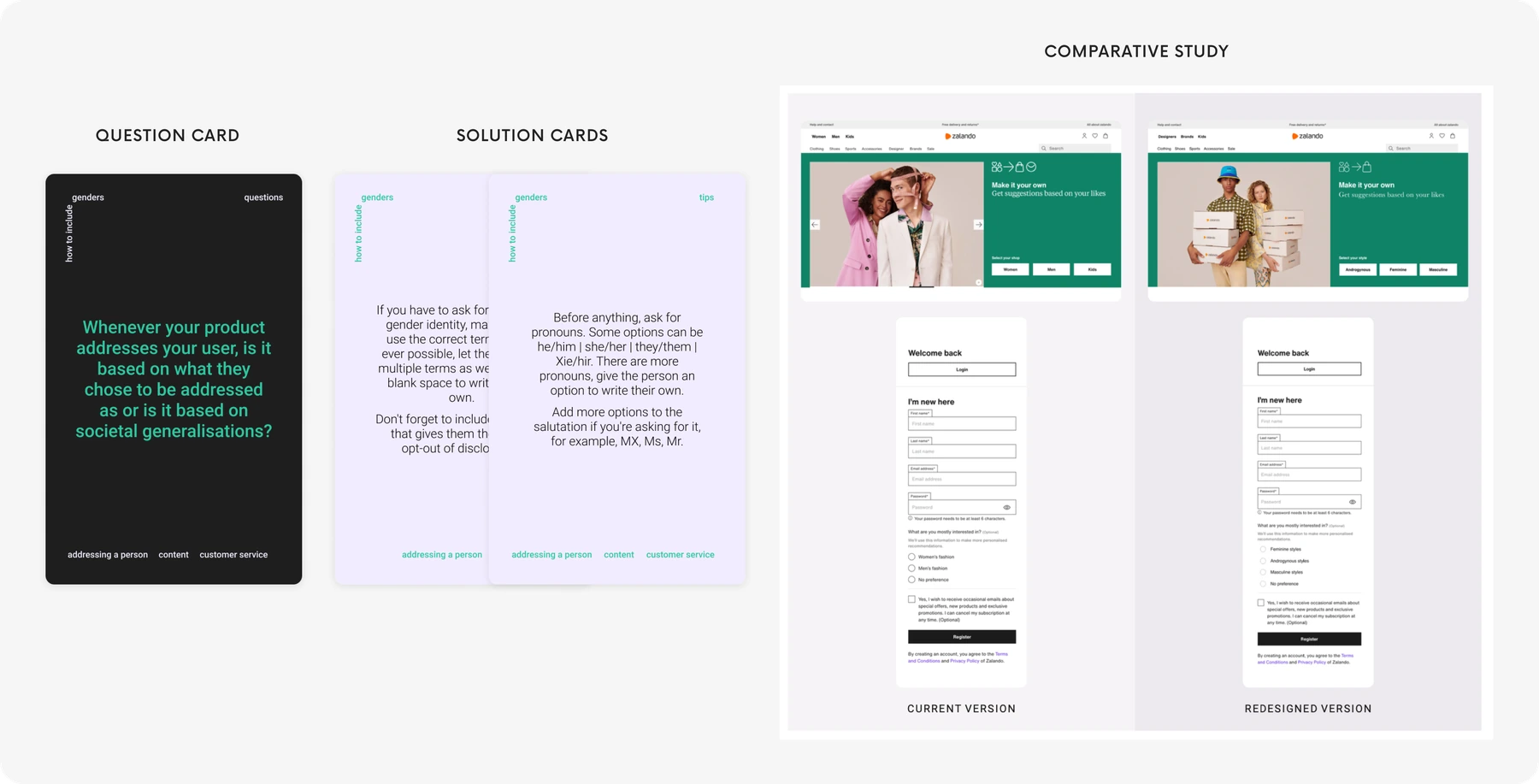
The cards connect a point of exclusion to questions and practical suggestions. For example, if exclusion appears in how a person is addressed, the relevant question and tip cards help explore more inclusive alternatives.
I tested selected recommendations through a comparative study. Non-cisgender participants preferred the redesigned e-commerce experience for its simplicity and closer alignment with their needs.
Testing It with Practitioners
I assessed the first version of the framework with people working across consulting, design, strategy and technology.
They evaluated:
- the relevance and understandability of the guide
- the flow between its stages
- how well the steps connected
- and its practical usefulness in an industry setting
Participants responded positively and also saw potential for the individual prompts and recommendations to be adapted beyond e-commerce into other products, services and organisational contexts.
One of my key learnings was that a well-structured framework can be adapted and reused across different kinds of problems.