Selected case study
Client work · Atoms
Ferragamo - Belt Configurator
- Timeline
- 5 months · 2022
- Role
- Experience Designer
- Status
- Launched after December 2022
Ferragamo wanted a mini-site where customers could configure and purchase belts from the main website. Because belts and buckles were sold separately, the experience had to make compatible combinations easy to understand while working within existing e-commerce and cart constraints.
What I did
My work covered:
- Benchmark and competitor analysis
- User-flow exploration
- Interaction and feature definition
- Information architecture
- Wireframes and iterations
- Experience review through UI design and development
I worked closely with the Project Manager, UI Designer and Developer as the experience moved from early direction to implementation.
Phase 1 : Setting the Direction Through Benchmarking
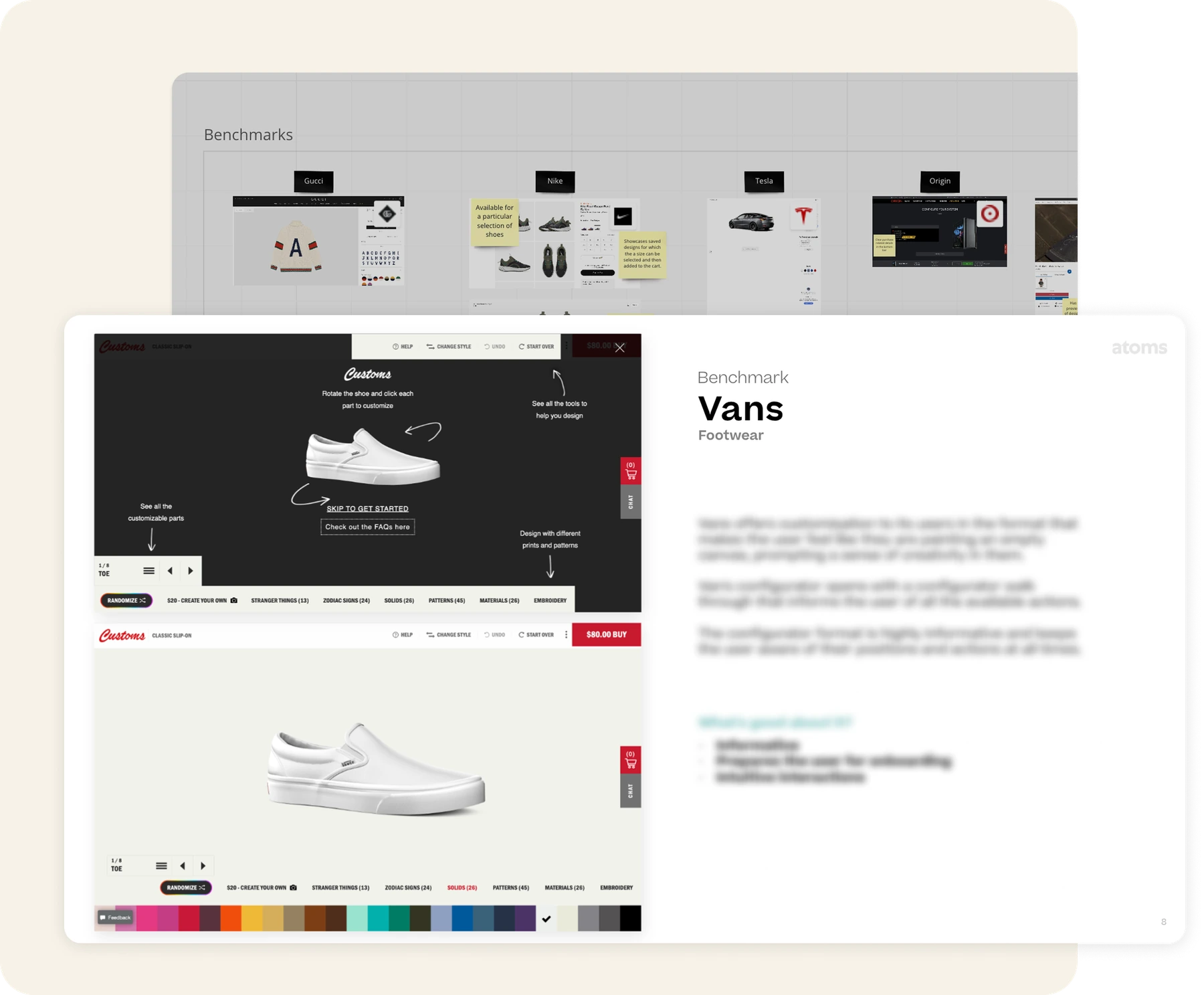
I began by understanding how configuration experiences already worked across different product categories.
Rather than limiting the benchmark to fashion, I looked at direct and indirect examples to study:
- different user flows,
- interaction patterns,
- common features,
- product presentation,
- and what made some configurators easier to use than others.
I shortlisted five examples and presented them to the client. The discussion helped us understand not only what patterns worked, but also which interaction styles and features felt appropriate for Ferragamo.
The benchmark became a practical way to align on the experience before designing it, giving us a shared reference for what to retain, adapt or avoid.
Phase 2 : Choosing the Flow
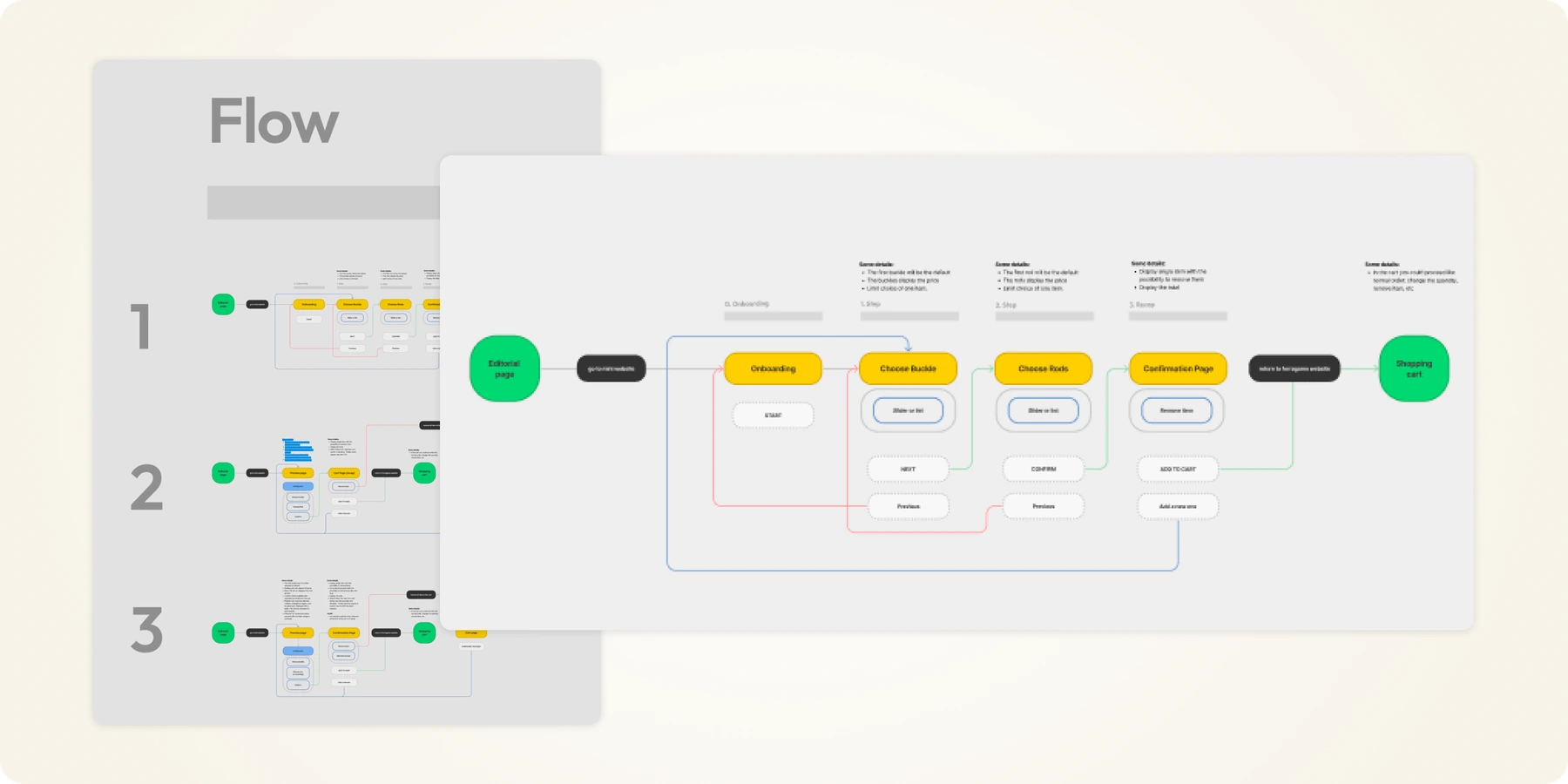
- I translated the strongest patterns from the benchmark into three possible user flows for the Ferragamo experience, each approaching the configuration journey slightly differently.
- We reviewed them with the client in a co-design session and used the discussion to narrow the feature set and select the direction we wanted to take forward.
Phase 3 : Shaping the Interaction
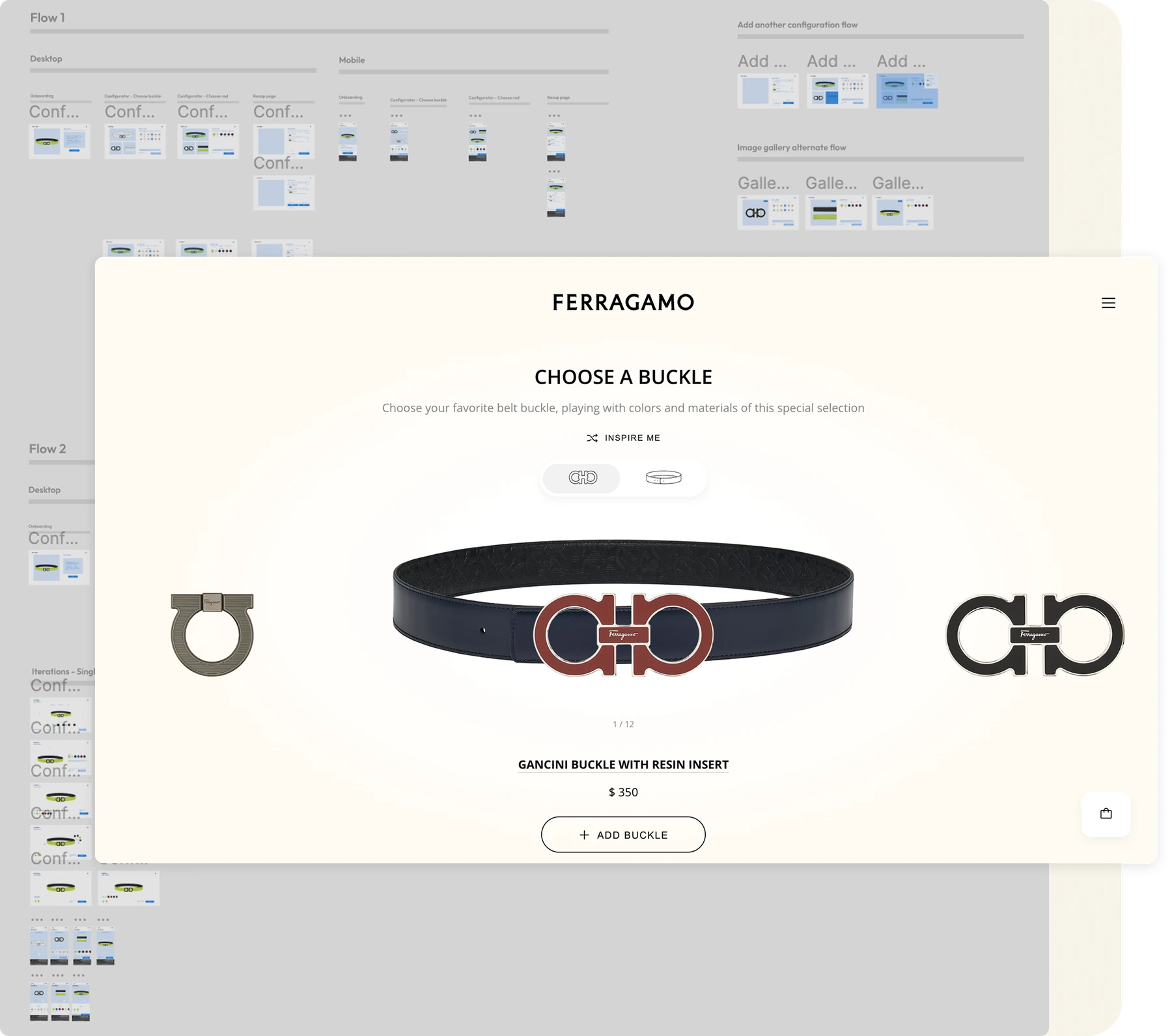
Once the flow was agreed, I explored five wireframe directions with different interaction models.
The selected direction focused on keeping the configuration visible while reducing unnecessary movement through the page.
A few decisions shaped the final experience:
-
Single-viewport configuration
The main configuration activity stayed within one view, keeping the product and its changes visible while customers made selections.
-
Less information competing for attention
Product details were available when needed without taking over the configuration experience.
-

Configurator onboarding
A short introduction helped customers understand how the experience worked before they began.
-
“Inspire Me”
A shuffle interaction offered combinations for customers who wanted to explore rather than build a set from scratch.
Phase 4 : From UX to Implementation
In the final phase, I worked closely with the UI Designer to make sure the visual treatment retained the intended experience and interaction logic.
I also worked with the Developer as the designs moved towards implementation, resolving interaction details and keeping the final experience aligned with the agreed flow.
The Final Configurator
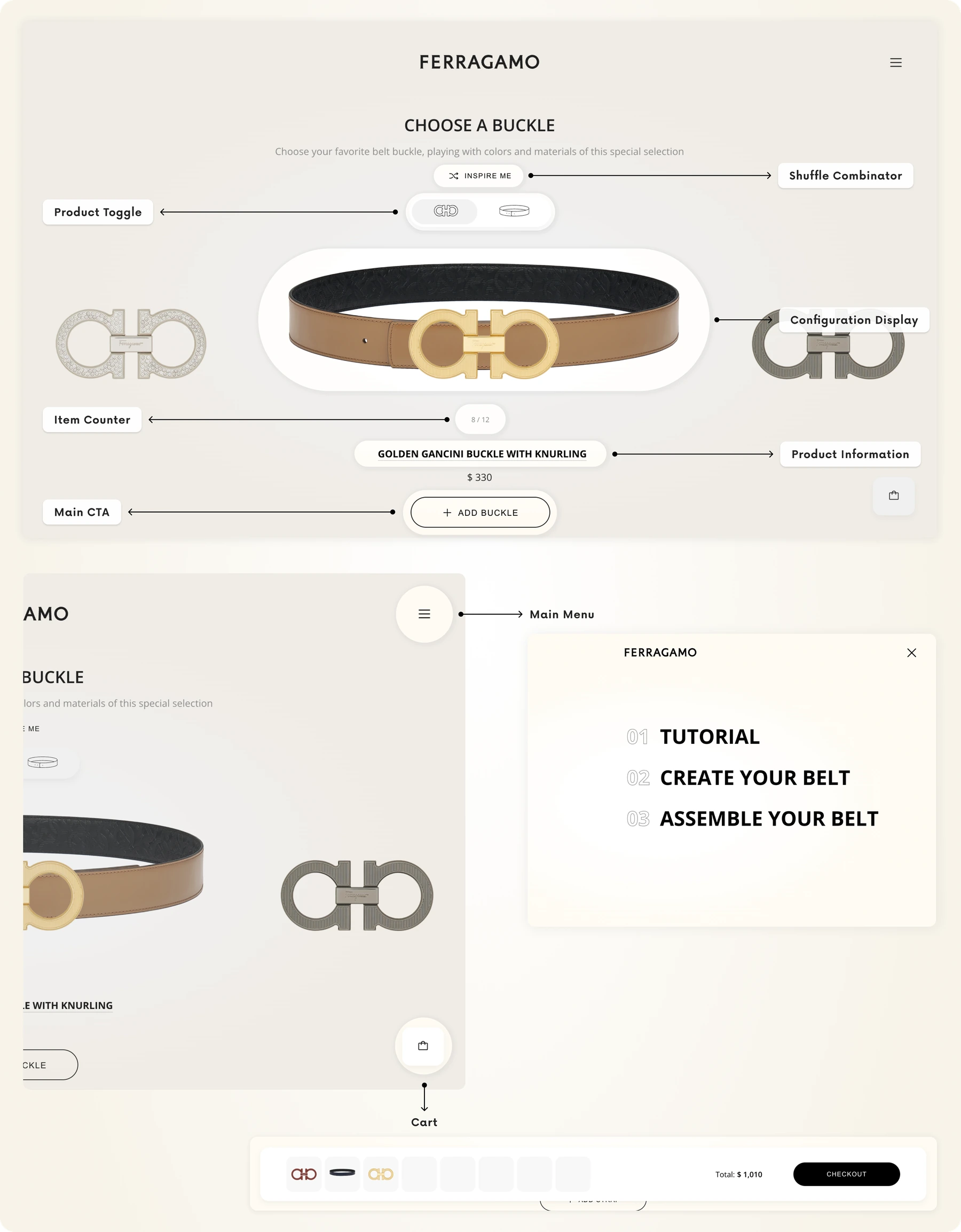
The final configurator brought the main actions into one focused experience:
- switch between product options,
- view combinations as they changed,
- explore suggested combinations,
- access product information,
- keep track of selected items,
- and move directly towards purchase.
The project went live after December 2022.